Those viral street performance videos have a way of stopping the scroll every single time. A musician stands on a busy corner with a guitar or a keyboard, playing something soft and inviting. A few people gather. Then someone from the crowd calls out a song request, maybe an old classic or a current hit.
Moments later a stranger walking past slows down, listens for a bar or two, and suddenly joins in with a voice that sounds like it belongs on a professional stage. The crowd goes wild. Phones come out. The performance builds into something that feels magical and completely unplanned.
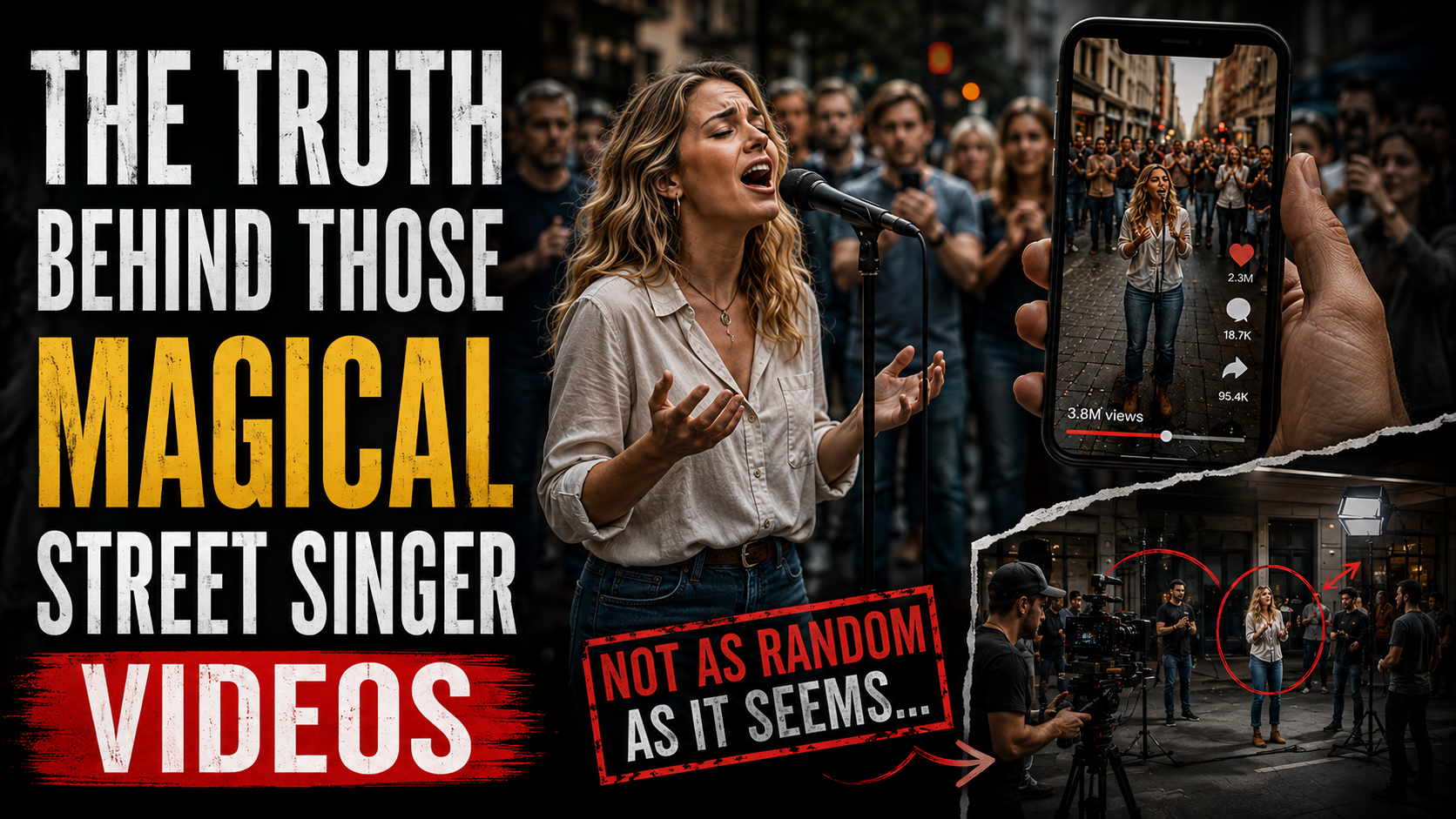
By the end the video has millions of views and thousands of comments calling it the most wholesome thing they have seen all week. The truth is less romantic. A large number of these clips are carefully arranged from the start. The musician is often a working professional who already knows the repertoire.
The person who shouts the song request is usually part of the team. The passerby with the angelic voice is not a random pedestrian at all but a singer who was positioned nearby and given a signal when the moment was right. Cameras are placed in advance, sometimes hidden in bags or held by people who look like ordinary spectators.
The whole sequence is timed so that the best take can be captured cleanly and edited into a neat package that runs two or three minutes. This kind of setup is not new. Street performers have always understood the value of a good show, and social media simply raised the stakes. What used to be a tip jar and a small local following can now become a steady income through ad revenue and sponsorships once a video crosses a certain view threshold.
The spontaneous miracle sells better than a rehearsed one, so the illusion of chance is protected at every step. Viewers are not told about the planning because the surprise is the product. The comments sections fill with people saying they cried or that their faith in humanity was restored, which only encourages more of the same content. Some of the channels that post these videos are open about their methods once you dig a little.
Others stay quiet and let the mystery do the work. Either way the pattern is consistent. The location is chosen for good lighting and steady foot traffic. The song list is prepared in advance so the singer can deliver without hesitation.
Multiple takes are often filmed until the energy feels right. Background reactions are encouraged or even staged so the crowd looks larger and more enthusiastic than it might have been in a truly random encounter. The final edit removes any awkward pauses or false starts that would break the spell. None of this means the talent on display is fake.
The musicians and singers really can play and sing at a high level. The emotional response from people watching on their phones is genuine too. What is manufactured is the framing that turns a capable performance into an apparent miracle of coincidence. That framing is powerful because most of us want to believe in unexpected beauty in ordinary places.
We like the idea that anyone walking down the street might suddenly reveal a hidden gift. The staged videos feed that desire efficiently and repeatedly. The result is a steady stream of content that looks effortless while requiring real coordination behind the scenes. Production teams scout locations, coordinate schedules, and sometimes even handle permits so the filming can happen without interruption.
Once the footage is in hand it is polished with captions, slow motion moments, and carefully chosen camera angles that highlight the singer’s face at the peak of the song. The finished product travels across platforms and collects views that translate into money. The cycle continues because it works. Audiences are not entirely fooled forever.
After seeing enough of these clips many people begin to notice the same faces or the same polished delivery that seems too perfect for a pure accident. Skepticism grows in comment threads. Yet the videos keep appearing and keep performing well because the emotional payoff remains strong even when the setup is suspected. People still share them.
They still watch them all the way through. The story of sudden talent on a city sidewalk continues to resonate. In the end these productions sit somewhere between genuine street art and calculated entertainment. The skill is real.
The planning is real. The sense of pure chance is the part that is carefully constructed for the camera. Understanding that does not have to ruin the enjoyment. It simply shows how far creators will go to deliver a moment that feels larger than everyday life, packaged neatly for an audience that is always hungry for the next surprise.