Heavy rains that began on August 11, 2026, triggered historic flooding across central Indiana, swelling the White River to levels not seen in more than a century. In Anderson the river crested at 24.9 feet. In Noblesville it reached 24.6 feet. Both marks surpassed the records set in 1913.
Neighborhoods in Marion and Hamilton counties took the brunt of the rising water. Homes along the river corridor in Indianapolis, Carmel, Rocky Ripple, Ravenswood and surrounding communities filled with murky floodwater. Roads and bridges washed out. Hundreds of families evacuated.
At least seven people died in storm related incidents across the state. As the water slowly receded in the days that followed, residents returned to find their homes transformed. Thick mud coated floors and walls. Furniture sat waterlogged and ruined.
Carpet, hardwood and laminate flooring had swollen and buckled. Drywall wicked moisture upward, leaving stains and the threat of mold. Personal belongings from family photos to appliances lay scattered or destroyed. Many homeowners faced the exhausting task of stripping out every soaked layer so that reconstruction could even begin.
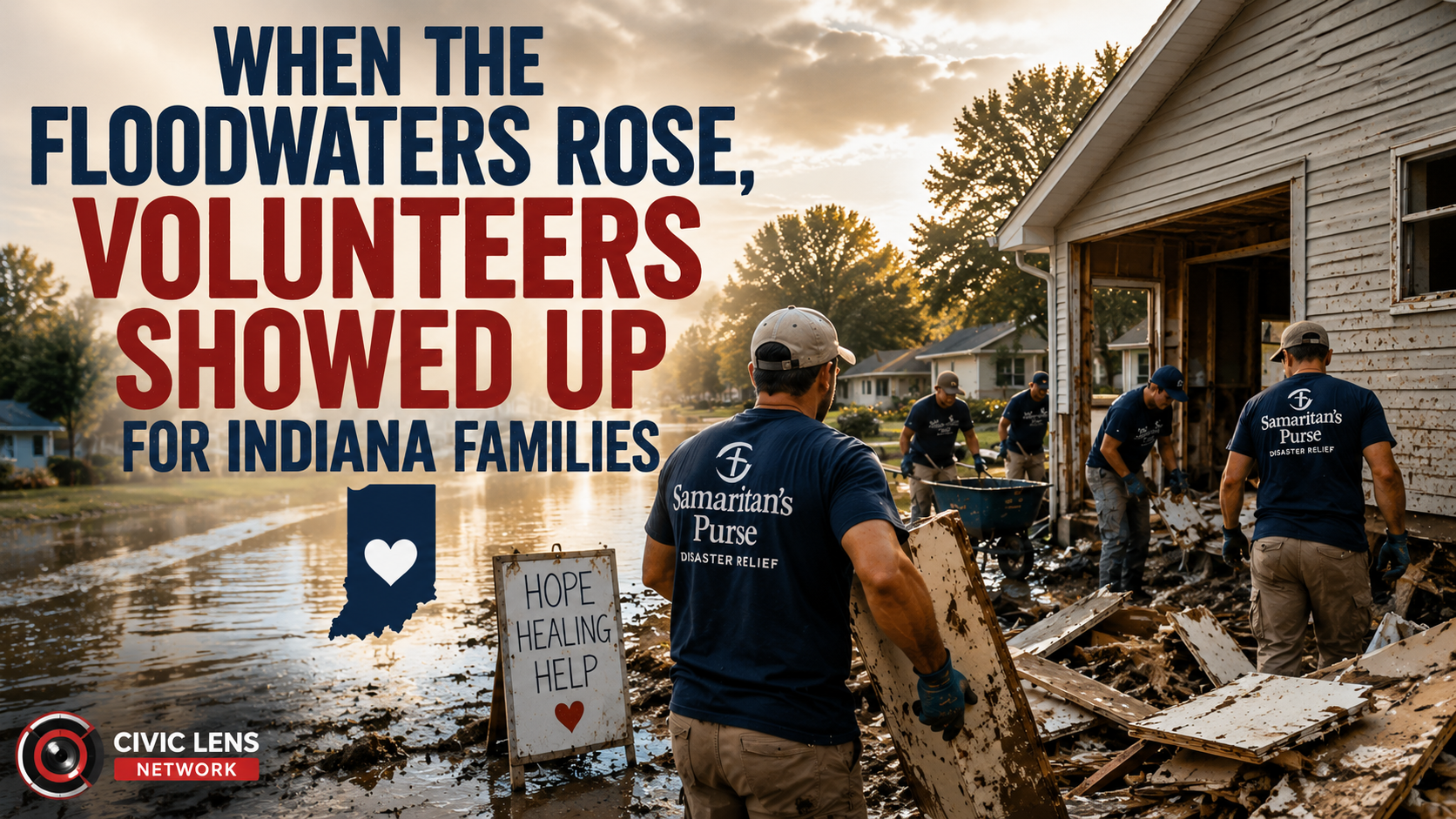
Into this scene stepped teams of volunteers. Samaritan’s Purse, a Christian disaster relief organization, deployed to central Indiana after assessing the damage with local emergency management officials. The group identified more than 200 homes affected in Marion and Hamilton counties. A Disaster Relief Unit, a tractor trailer loaded with tools and supplies, arrived on the ground.
The operation base opened at Northview Church on Hazel Dell Parkway in Carmel. Day volunteers began work on Monday, August 24. The practical work is straightforward and demanding. Volunteers enter flooded houses and mud out the interiors.
They cut and remove soiled drywall and flooring. They help families salvage what personal belongings can still be saved. They carry debris, including fallen trees swept into yards, to the curb for later disposal. The goal is to return each home to a condition where professional contractors can safely begin repairs.
City officials in Indianapolis have noted that these insured volunteers also assist with furniture removal and sanitization to limit further damage from mold. For many of the people who put on the organization’s orange shirts, the labor carries a deeper purpose. Helping strangers whose lives have been upended by disaster is an expression of their Christian faith. Samaritan’s Purse views this service as a way of demonstrating the compassion and teachings of Jesus through concrete action.
The organization draws its name from the biblical account of the Good Samaritan, the traveler who stopped to care for a wounded stranger when others passed by. That same principle of loving one’s neighbor shapes the daily work now underway in Indiana neighborhoods. Volunteers arrive with tools rather than speeches. Their willingness to crawl through mud, tear out ruined walls and haul debris shows the connection more clearly than words alone.
Residents still confront long lists of needs. Insurance claims must be filed. Temporary housing arranged. Contaminated items discarded.
Yet the presence of outside helpers has begun to shift the isolation that often follows a disaster. Local emergency managers and church partners continue to coordinate additional support. The White River continues its slow retreat. The hard work of recovery has only started.
In the affected streets of central Indiana, however, families no longer face the cleanup entirely alone.