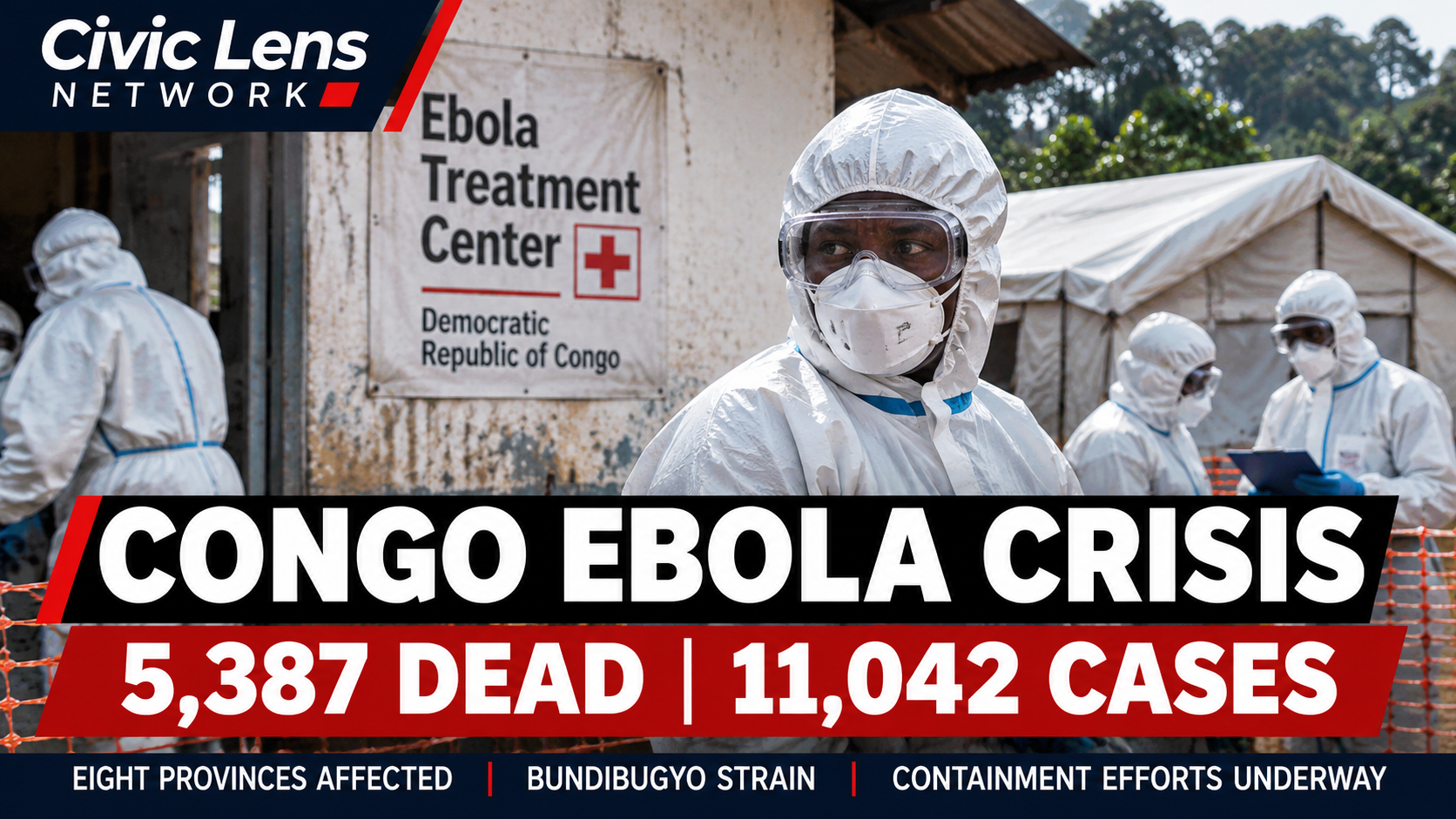
A devastating Ebola outbreak in the Democratic Republic of Congo has killed at least 5,387 people and infected more than 11,000, making it the deadliest outbreak in the country’s history and raising serious concerns about the virus spreading across Africa.
New government figures released Wednesday show 11,042 confirmed infections since the outbreak began in May. Nearly half of those infected have died, placing the crisis among the worst Ebola epidemics ever recorded.
The outbreak involves the Bundibugyo strain of Ebola, a dangerous virus for which no approved vaccine or specific treatment currently exists.
Eight of Congo’s 26 provinces have reported infections, with the eastern provinces of Ituri and North Kivu suffering the greatest devastation.
Ituri accounts for nearly 70 percent of reported cases, while North Kivu has become a major center of new infections.
The emergency has extended beyond Congo’s borders. Cases have also been identified in Uganda, Kenya and Nigeria, prompting additional health surveillance and containment measures.
Kenya announced Wednesday that its final hospitalized Ebola patient had recovered and been discharged. The country recorded nine confirmed cases and two deaths and must now complete a 42-day monitoring period without another infection before being declared free of the disease.
Meanwhile, Congo’s containment efforts face extraordinary obstacles.
Armed conflict in eastern Congo has prevented medical teams from reaching infected communities. Attacks on healthcare workers have further disrupted efforts to identify patients and prevent additional transmission.
Two recent attacks killed four health workers, while more than 1,000 people who may have been exposed to Ebola have been lost to follow-up.
Health authorities are also confronting widespread misinformation, resistance to medical screenings and difficulties conducting safe burials.
The crisis has reached schools, where infections and deaths among staff members have left communities traumatized.
Scientists are working to develop vaccines against the Bundibugyo strain, with clinical trials involving experimental candidates now underway.
Ebola spreads primarily through direct contact with the blood or other bodily fluids of infected people or contaminated materials. It is not generally transmitted through ordinary airborne exposure.
The current epidemic is the world’s second-largest recorded Ebola outbreak, surpassed only by the West African epidemic between 2014 and 2016, which killed more than 11,000 people.
With thousands already dead, continued transmission in eastern Congo and healthcare workers facing deadly attacks, international health officials warn that containing the outbreak will require improved security, medical resources and access to affected communities.