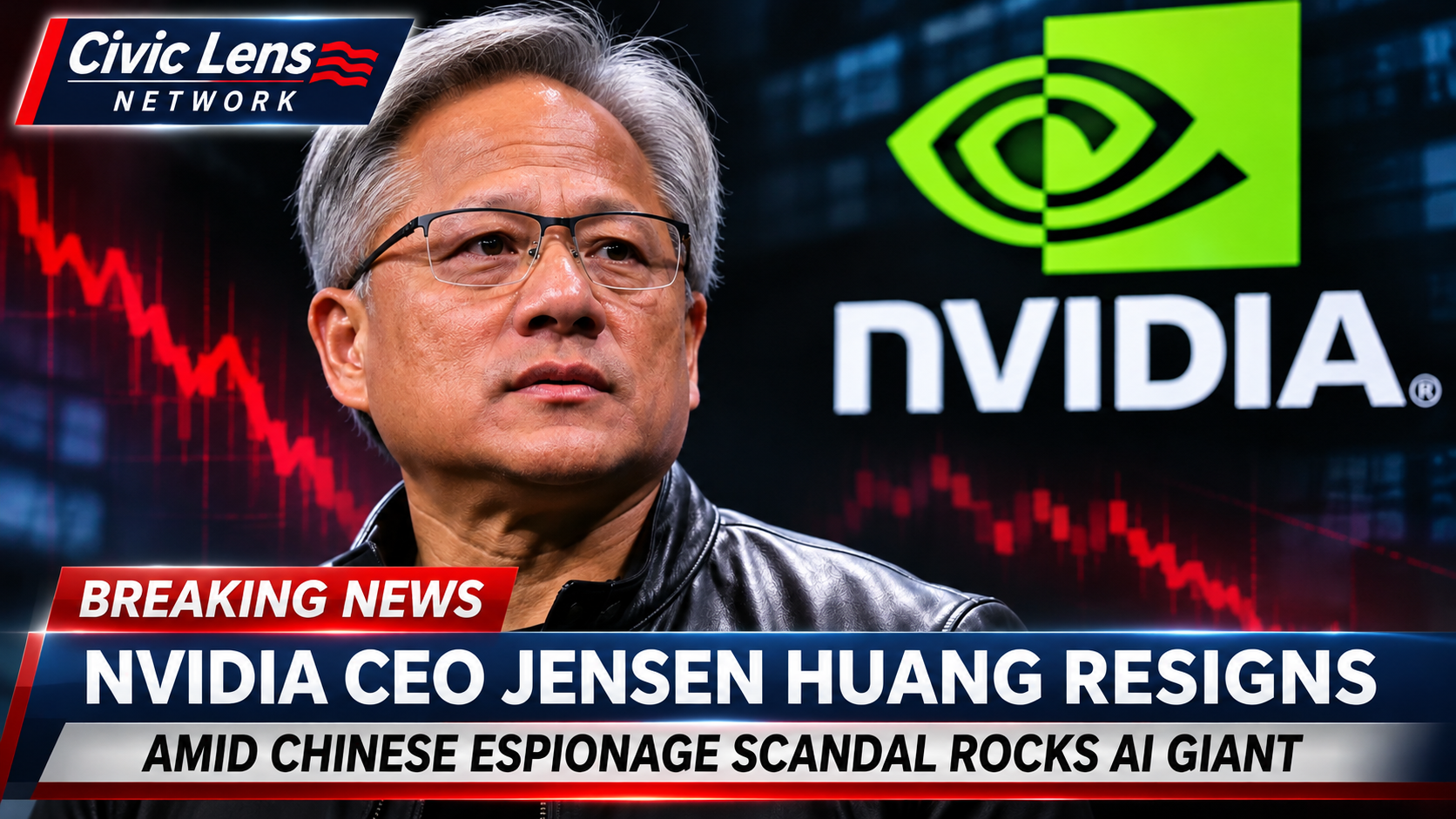
Nvidia founder and CEO Jensen Huang has resigned from the technology giant he built over more than three decades, following explosive allegations involving extramarital affairs, suspected Chinese espionage and growing concerns over American national security.
The stunning departure was announced Thursday, November 12, ending Huang’s 33-year leadership of one of the world’s most valuable companies.
Nvidia confirmed that Huang, 63, has stepped down as president, chief executive officer and board member. Chief Financial Officer Colette Kress will assume the role of interim CEO while the company searches for a permanent replacement.
The resignation follows reports that Huang maintained a personal relationship with Alice Huang, a businesswoman formerly associated with Singapore-based technology company Megaspeed International. American intelligence officials reportedly suspect that she was acting on behalf of Chinese intelligence.
Jensen Huang and Alice Huang are not related.
The allegations have raised serious questions about whether sensitive American technology, confidential business information or advanced artificial intelligence chips could have been exposed to foreign intelligence operations.
Huang has denied compromising national security or Nvidia’s confidential information. Chinese officials have disputed the espionage allegations, and no public finding has established that Huang knowingly assisted Chinese intelligence.
The controversy intensified after additional reports surfaced alleging that Huang had a separate relationship with Kimberly Powell, a senior Nvidia executive who reported to him.
On November 8, Huang acknowledged marital infidelity in a message to Nvidia employees, apologized to his family and accepted responsibility for his personal conduct.
That same day, Nvidia’s board announced an independent investigation into whether its chief executive had been targeted by a foreign intelligence operation.
The board initially expressed confidence in Huang, stating that it had no reason to believe national security or company secrets had been compromised.
Within days, however, mounting political pressure, shareholder concerns and additional revelations placed his leadership in jeopardy.
The controversy has also attracted attention in Washington, where lawmakers have been examining allegations involving Nvidia’s business relationships in China and the possible diversion of advanced American semiconductor technology.
Nvidia produces some of the world’s most powerful artificial intelligence processors. Its technology supports major American data centers, military research, advanced computing systems and the rapidly expanding AI industry.
That makes questions surrounding foreign intelligence access particularly consequential.
For years, Washington has attempted to restrict China’s access to advanced American semiconductor technology over concerns that sophisticated AI processors could strengthen Beijing’s military and intelligence capabilities.
The allegations involving Huang have intensified scrutiny of those restrictions and whether existing safeguards adequately protect American technological advantages.
President Donald Trump, who has maintained a working relationship with Huang, previously expressed support for the Nvidia executive as the controversy unfolded.
The scandal has also shaken Wall Street.
Nvidia shares plunged more than 12 percent during Thursday’s early trading, threatening to erase hundreds of billions of dollars in shareholder value.
Investors are now confronting the prospect of Nvidia operating without the executive who transformed it from a graphics-chip manufacturer into a dominant force in artificial intelligence.
Huang co-founded Nvidia in 1993 and remained its most recognizable leader throughout its rise. His decisions helped position the company at the center of the global AI expansion.
Replacing him presents a substantial challenge.
Kress, who has served as Nvidia’s chief financial officer since 2013, will oversee the company’s operations during the transition. The board has also appointed longtime director Harvey Jones as chairman.
Company leadership has sought to reassure customers and investors that existing commitments, product development and business operations will continue without interruption.
Nevertheless, the investigation surrounding Huang’s relationships and potential foreign intelligence connections remains a significant unresolved issue.
The central question now extends beyond the resignation of a powerful technology executive.
Investigators and lawmakers must determine whether the controversy represents a personal scandal involving a prominent corporate leader or whether it exposed genuine weaknesses in the protection of strategically important American technology.
For Nvidia, the immediate challenge is restoring investor confidence while navigating a leadership transition at one of the most influential companies in the global economy.