Another major frustration among conservative Americans has been the growing difficulty of earning a decent living and purchasing a home.
For years, working-class families have watched housing prices rise, mortgage payments become increasingly unaffordable, and everyday expenses consume more of their paychecks.
Many Americans who once believed that hard work would eventually allow them to purchase a home now find themselves struggling just to cover rent, groceries, insurance, and utilities.
These economic frustrations helped fuel anger toward Republican leadership.
But conservatives who responded by helping Democrats gain power may discover that the policies they opposed under Republican leadership are replaced by policies they believe could make their financial struggles even worse.
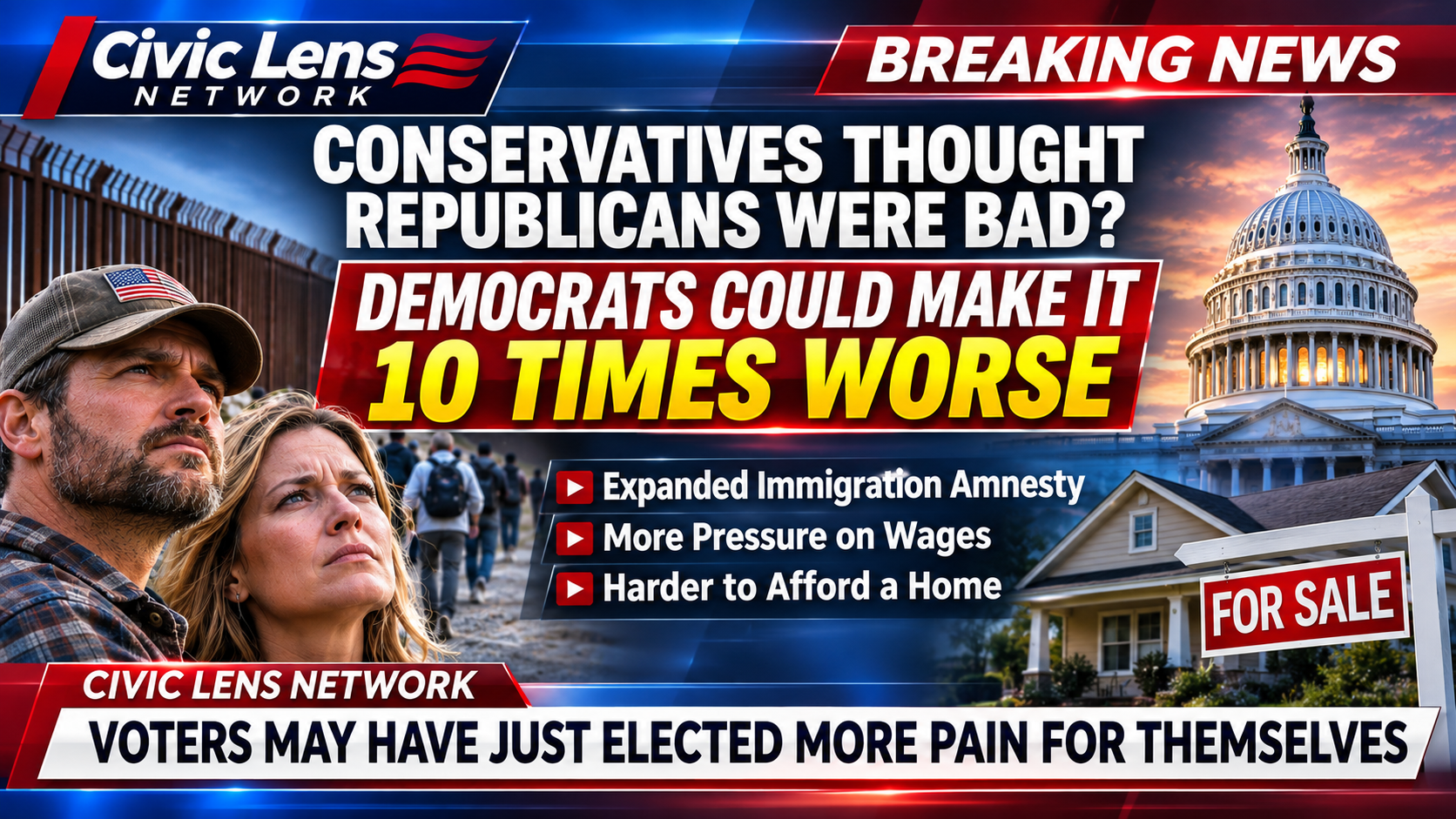
One concern involves immigration and its potential effects on wages and housing demand.
Conservative critics argue that expanding the labor supply through additional immigration can increase competition for certain lower-wage jobs, potentially weakening wage growth for some American workers.
Economists disagree about the magnitude of these effects, and immigration can also increase economic output, consumer demand, and the available workforce.
Nevertheless, the concern deserves serious consideration, particularly for Americans already struggling to get ahead.
Housing presents another challenge.
When population growth outpaces residential construction, additional demand can contribute to rising rents and home prices, especially in communities already experiencing housing shortages.
If Democrats pursue expanded immigration programs without addressing housing supply, infrastructure, and affordability, critics argue that working-class Americans could face even greater competition for limited housing.
Of course, immigration is not the only factor driving the housing crisis. High construction costs, restrictive zoning laws, interest rates, and years of insufficient housing development have also contributed.
But for conservatives who already believe Washington has ignored their economic concerns, the possibility of policies that add pressure to wages and housing affordability is especially troubling.
The political irony is difficult to ignore.
Some voters who were angry because their wages were not keeping up and homeownership seemed increasingly impossible may have helped elect politicians whose proposed policies they fear could intensify those same problems.
Instead of gaining economic relief, they could face additional financial pressure.
That does not mean every Democratic policy will necessarily lower wages or increase housing costs. Those outcomes depend on the legislation enacted and broader economic conditions.
But the central warning remains.
Voters who wanted relief from economic hardship should carefully consider whether the policies of the politicians they helped elect will actually improve their financial situation or make an already difficult life even more expensive.
For conservative Americans who believed Republicans had failed them, the next two years could become an uncomfortable lesson in the consequences of political frustration.