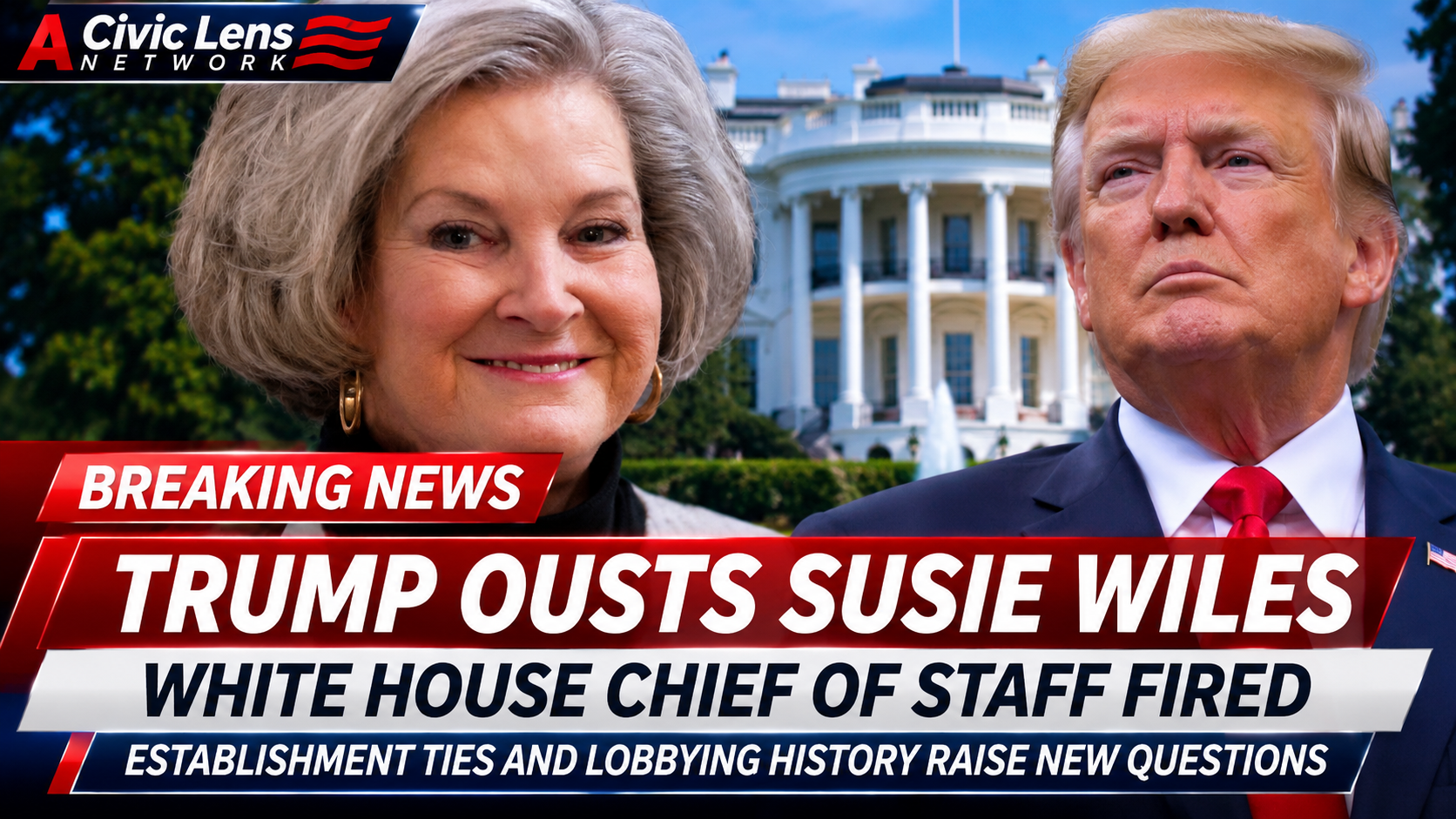
President Donald Trump has removed Susie Wiles from her position as White House chief of staff, delivering one of the most significant personnel shakeups of his second administration and raising a question that has followed his political movement for years: How much influence should Washington’s entrenched political establishment have inside an administration elected to challenge it?
Wiles, a veteran Republican strategist with decades of experience in campaigns, government, and corporate lobbying, will be replaced by Stephen Miller, one of Trump’s longest-serving and most ideologically committed advisers.
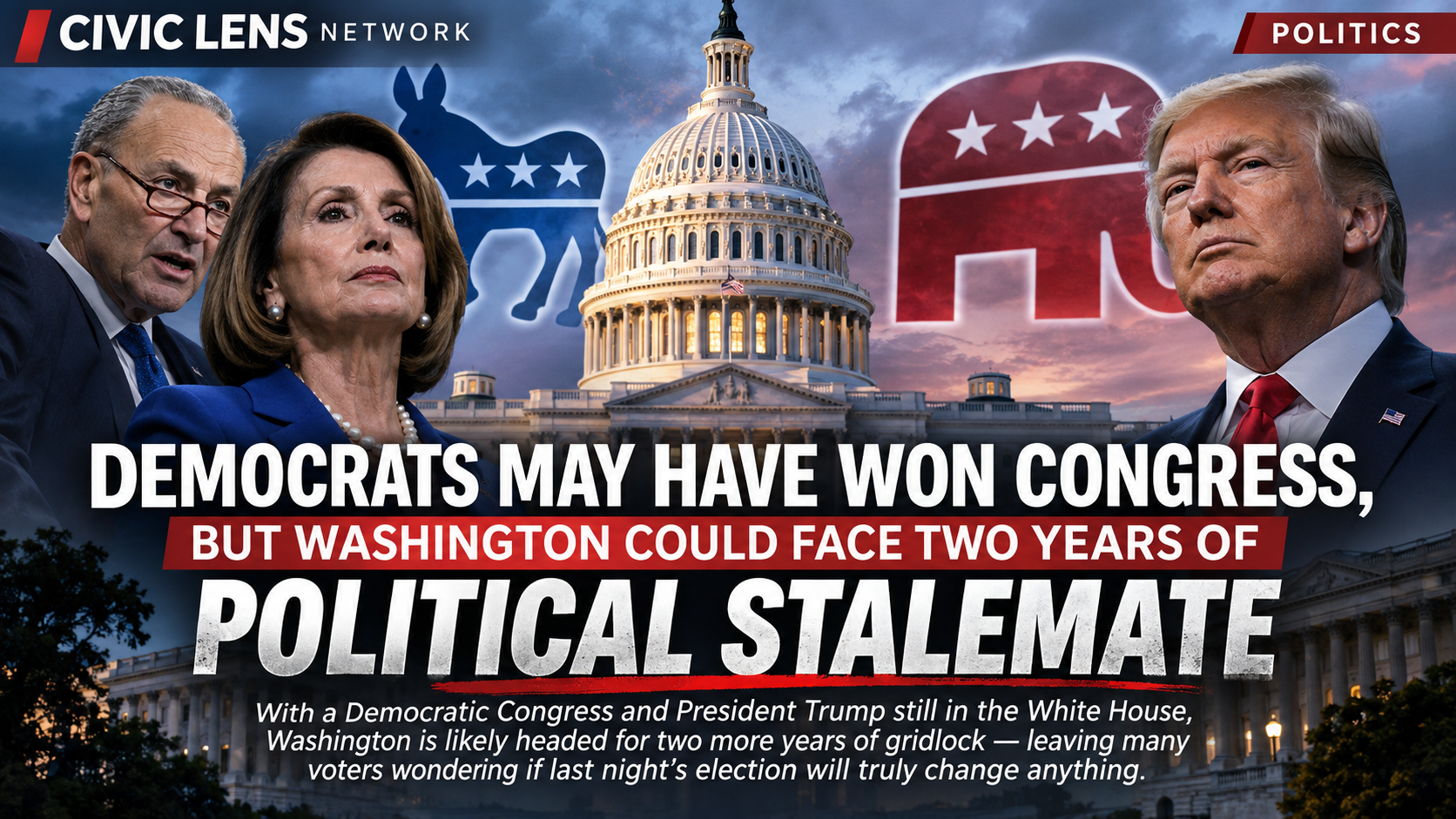
The announcement follows a disastrous midterm election for Republicans, who lost control of Congress and now face the prospect of spending the final two years of Trump’s presidency battling Democratic majorities.
But the departure also brings renewed attention to Wiles’ political background, her connections to powerful lobbying interests, and the longstanding tension between Trump’s anti-establishment promises and the experienced Washington operators he has repeatedly brought into his administration.
For conservatives who believe Trump was elected to dismantle the political establishment rather than accommodate it, the personnel change raises an important question.
Was Wiles the kind of establishment insider Trump’s movement was supposed to replace?
Trump Makes His Move After Republican Election Disaster
Trump announced that Miller would assume the chief of staff position on November 9.
The president publicly thanked Wiles for her service and said she would transition into his political operation.
Wiles also confirmed her departure, describing her time serving the president as an honor and expressing continued commitment to his political mission.
However, the timing is impossible to ignore.
Republicans had just suffered major electoral defeats, losing congressional power and leaving the administration facing a dramatically different political landscape.
Reports indicated that Trump had become increasingly frustrated with his political team’s strategy and the election results.
Wiles, who had helped orchestrate Trump’s successful 2024 presidential campaign, was among the senior figures facing scrutiny.
The president’s decision to replace her with Miller suggests that he wants a different approach as his administration prepares for confrontation with a Democratic-controlled Congress.
Whether Wiles resigned voluntarily, was pressured to leave, or departed through a mutually negotiated arrangement remains less clear than the central fact: Trump has decided she will no longer run his White House staff.
The Establishment Background Behind Trump’s Chief of Staff
Susie Wiles was never a political newcomer.
Her career stretches back decades, including work in Republican campaigns, local government, and the administration of President Ronald Reagan.
She helped elect Florida politicians, managed major campaigns, and built relationships across the Republican political establishment.
Her political résumé includes involvement with Rick Scott’s successful Florida gubernatorial campaign, Ron DeSantis’ 2018 gubernatorial victory, and Trump’s presidential campaigns.
That experience made her valuable to Republican candidates seeking electoral success.
But it also made her precisely the kind of deeply connected political professional who can draw suspicion from voters demanding a fundamental break with establishment politics.
Trump’s movement was built in substantial part on the argument that Washington’s permanent political class had become too powerful, too insulated from ordinary Americans, and too comfortable operating behind closed doors.
Wiles’ background illustrates how difficult it has been for that movement to separate itself from the traditional political machinery.
She was not merely a campaign adviser.
She also worked as a corporate lobbyist.
Corporate Lobbying Connections Raise Questions
Before becoming White House chief of staff, Wiles was a partner at Ballard Partners, a prominent lobbying firm with extensive connections to Republican political circles.
The firm’s clients have included major corporations, trade associations, and government-related interests.
Wiles’ lobbying work included clients such as General Motors, homebuilders, and organizations representing children’s hospitals.
Her career also included registered lobbying work connected to Globovisión, a Venezuelan television network owned by businessman Raúl Gorrín, who faced federal money-laundering charges.
The firm later described its relationship with Gorrín as a mistake and maintained that Wiles had very little involvement in managing that account.
There is no established finding that Wiles committed wrongdoing through these lobbying relationships.
Nevertheless, the connections raise legitimate questions about the revolving door between corporate lobbying, political campaigns, and senior government positions.
Americans have repeatedly been told that powerful lobbying interests exercise too much influence over Washington.
Yet individuals with extensive lobbying backgrounds continue to move into positions where they help determine who gets access to the president and which priorities receive attention.
That contradiction deserves scrutiny regardless of which political party controls the White House.
For supporters of Trump’s original promise to drain the swamp, replacing entrenched political influence with genuine accountability should be more than a campaign slogan.
It should be a standard applied to the people closest to the president.
The White House Interviews That Exposed Internal Tensions
Wiles’ position also came under scrutiny following unusually candid interviews published in December 2025.
In those interviews, she made controversial observations about Trump and several prominent administration figures.
She described Trump as having an alcoholic’s personality despite his abstinence from alcohol.
She criticized then-Attorney General Pam Bondi’s handling of the Jeffrey Epstein files and questioned Vice President JD Vance’s history of embracing conspiracy theories.
The remarks created an extraordinary situation in which the president’s own chief of staff appeared to be publicly criticizing members of the administration she was responsible for helping manage.
Wiles later objected to the way the interviews were presented, describing the publication as misleadingly framed.
Trump and other administration officials defended her at the time.
But the controversy highlighted a fundamental issue inside any White House: The president must be able to trust the judgment, discretion, and loyalty of the person controlling access to his office.
A chief of staff is not simply an administrator.
That individual influences presidential scheduling, policy discussions, personnel decisions, internal disputes, and the flow of information reaching the Oval Office.
When questions arise about that person’s political judgment or relationship with senior officials, the consequences can reach across the entire administration.
Stephen Miller Represents a Different Kind of Leadership
Trump’s selection of Stephen Miller is significant.
Miller has been associated with Trump’s political movement since the 2016 presidential campaign and has become one of the administration’s most prominent advocates of aggressive immigration enforcement.
Unlike traditional Republican campaign consultants who have worked across competing political factions, Miller’s public career has become closely identified with Trump’s nationalist and America First agenda.
He has supported expanded immigration enforcement, stronger border restrictions, and the use of executive authority to implement administration priorities.
His promotion suggests that Trump is placing greater emphasis on ideological alignment and policy execution as he prepares for the next two years.
Miller will now occupy one of the most powerful unelected positions in the federal government.
He will help manage White House operations, coordinate policy priorities, and determine how the administration responds to congressional opposition.
For conservatives frustrated by what they perceive as excessive compromise from establishment Republicans, the appointment may be viewed as an opportunity to strengthen the administration’s commitment to its original promises.
However, the real test will not be Miller’s reputation.
It will be whether his leadership produces measurable results.
Did Establishment Politics Contribute to Republican Defeat?
The Republican midterm losses have intensified debate over the direction of the party.
Conservative voters have expressed frustration over affordability, housing costs, wages, government spending, and the pace of promised reforms.
Those concerns cannot automatically be blamed on one White House official.
Nevertheless, senior political advisers are hired to anticipate electoral problems, communicate priorities, and help presidents navigate political challenges.
When an administration suffers a major electoral setback, its leadership team should expect scrutiny.
Wiles played a central role in managing Trump’s political operations and later his White House.
That makes her performance a legitimate subject of examination.
Was the administration receiving sound political advice?
Were voters’ economic frustrations being adequately addressed?
Did senior advisers recognize the warning signs before the election?
And were establishment political calculations interfering with the administration’s ability to communicate its priorities?
Those questions deserve answers rather than automatic assurances that every senior official performed flawlessly.
The Swamp Is Bigger Than One Person
There is an important distinction between removing a powerful political insider and dismantling the political system that allows insiders to accumulate influence.
Wiles is leaving her White House position, but she is not leaving Trump’s political organization.
That detail matters.
If the objective is to reduce establishment influence, moving a veteran political operative from one powerful position to another does not necessarily accomplish that goal.
The broader problem involves lobbying relationships, political patronage, access to government decision-makers, and the ability of well-connected insiders to move between private interests and public authority.
Those practices existed long before Wiles entered the White House and will continue unless political leaders adopt meaningful reforms.
Conservatives who demand accountability should apply that standard consistently, including to Republican officials and advisers.
Political loyalty alone should never exempt anyone from scrutiny.
Trump’s Next Two Years Could Define His Legacy
The appointment of Stephen Miller comes at a critical moment.
With Democrats preparing to control Congress, Trump faces significant obstacles to passing legislation.
His administration may increasingly rely on executive actions, administrative authority, and legal strategies to pursue its remaining priorities.
That makes the chief of staff position especially consequential.
Miller’s responsibilities will extend beyond immigration.
He will be expected to coordinate an administration facing congressional investigations, political opposition, and pressure to deliver results before the next presidential election.
The transition also provides Trump with an opportunity to examine the broader structure of his administration.
If the president believes Washington’s establishment has obstructed his agenda, the solution must involve more than changing names on office doors.
It requires clear priorities, accountability for failed decisions, and a willingness to confront entrenched interests even when they are politically connected.
A Shakeup That Could Signal Something Bigger
Susie Wiles’ departure marks the end of a significant chapter in Trump’s second presidency.
She helped guide his political comeback, became the first woman to serve as White House chief of staff, and occupied one of the most influential positions in American government.
Her removal from that position is now confirmed.
But whether it represents a genuine break from establishment politics remains an open question.
Wiles’ decades of political experience and corporate lobbying connections make her career a legitimate subject of scrutiny. They do not, by themselves, prove corruption or disloyalty.
The larger issue is whether the Trump administration will finally establish a clear separation between the political establishment it promised to challenge and the people entrusted with carrying out that promise.
For voters who supported Trump because they wanted Washington to operate differently, personnel changes are only the beginning.
The real measure of success will be whether the administration delivers the reforms, transparency, and accountability it promised.
Replacing Susie Wiles may change who controls the White House.
Whether it changes the way Washington operates is the question that matters most.