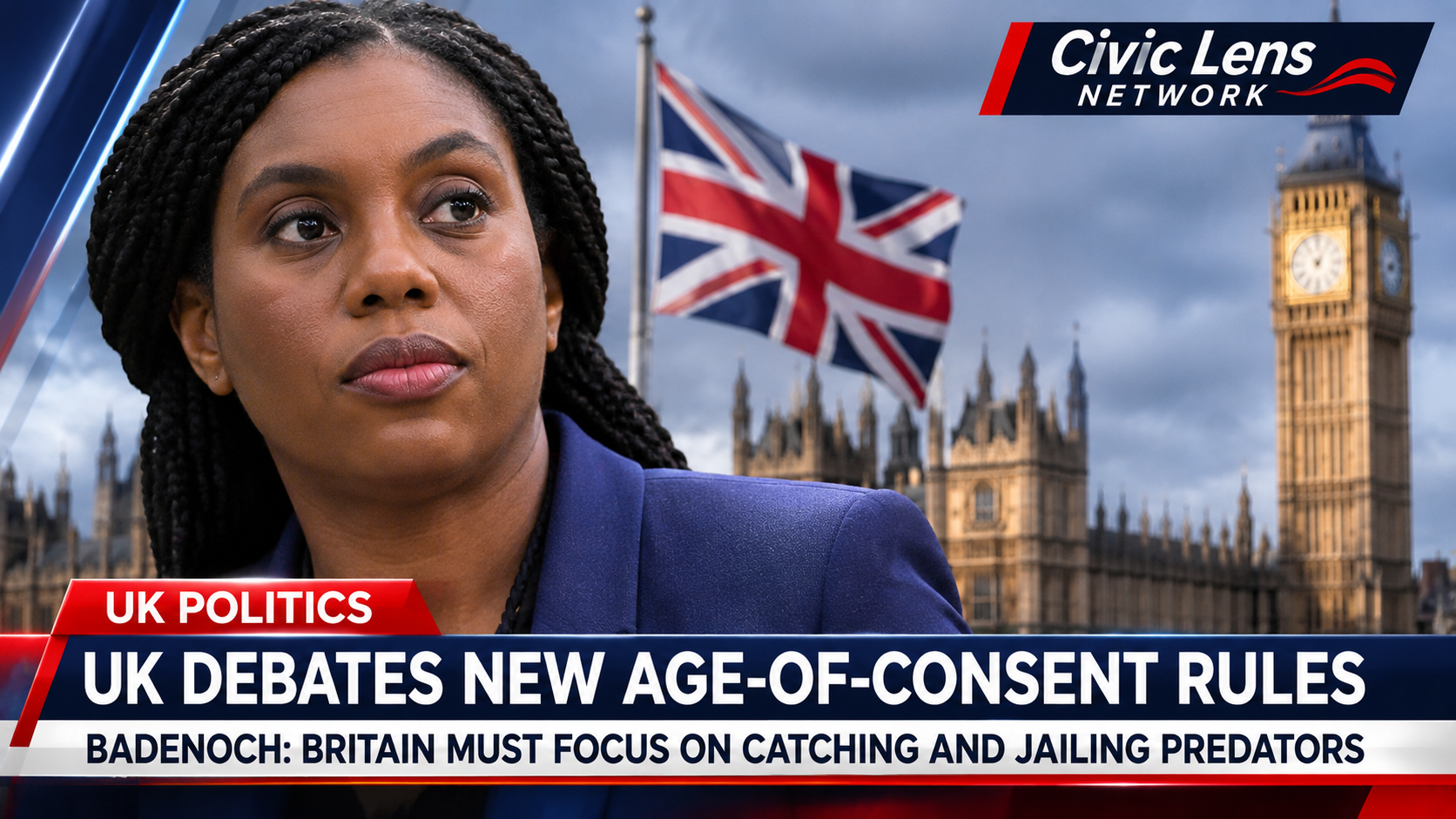
Britain’s political establishment is once again debating how to protect children from sexual predators. This time, the discussion centers on changing the country’s age-of-consent laws following the conviction and imprisonment of comedian Russell Brand.
But while politicians discuss another potential legal reform, a more fundamental question deserves attention: Why should British families trust the government to enforce new protections when existing laws have already failed too many vulnerable children?
The United Kingdom currently has an age of consent of 16. Under a proposal receiving attention in Westminster, a staggered system could make sexual relationships between significantly older adults and 16- or 17-year-olds illegal.
The proposal would strengthen existing age-related protections, not lower the age of consent.
Yet changing the law on paper means little if the government cannot identify offenders, investigate complaints, prosecute serious crimes and ensure convicted predators serve meaningful prison sentences.
That is the central issue Britain’s political leaders should be confronting.
Badenoch Challenges Westminster’s Priorities
Conservative Party leader Kemi Badenoch questioned the effectiveness of the proposed changes on Monday, November 16, arguing that Britain’s immediate priority should be catching people who are already targeting children.
Badenoch acknowledged the concerns surrounding relationships between teenagers and substantially older adults. However, she warned that introducing another legal restriction would not automatically solve the country’s enforcement problems.
Her argument deserves serious consideration.
A government can pass legislation, announce new initiatives and promise tougher protections. None of those measures guarantees that police will have the resources to investigate offenders or that prosecutors will successfully bring them to justice.
Badenoch also highlighted Britain’s shortage of prison capacity.
That is not a minor administrative inconvenience. If the justice system lacks sufficient capacity to imprison dangerous offenders, promises of tougher punishment risk becoming political theater.
Protecting children requires more than announcing that certain conduct is unacceptable. It requires ensuring that people who violate the law face consequences.
Britain’s Grooming Gang Scandal Cannot Be Ignored
Any serious national conversation about protecting children must confront Britain’s long-running grooming gang scandals.
For years, authorities in multiple British communities failed to protect vulnerable girls from organized sexual exploitation.
Investigations into these scandals exposed failures involving police, social services and local authorities.
Some victims were dismissed, ignored or treated as unreliable even after reporting serious abuse.
Those failures were not simply shortcomings in legislation. They represented failures by institutions entrusted with protecting children.
Parliamentary debates in 2026 have continued examining how offenders exploited weaknesses in existing sexual-offence laws, including arguments concerning victims’ ages and supposed consent.
Lawmakers have considered measures designed to close those loopholes and strengthen prosecution of sexual offences against children under 16.
That work matters because predators should not be able to escape accountability through technical defenses that undermine the protection of vulnerable children.
But Britain must also confront the institutional culture that allowed abuse to continue despite repeated warning signs.
When authorities fail to act on credible allegations, the consequences fall on victims rather than the officials responsible for protecting them.
Tougher Enforcement Must Come Before Political Celebration
The Labour government has indicated that the proposed staggered age-of-consent system deserves examination.
A spokesperson for Prime Minister Keir Starmer described changing the law as a significant step requiring careful consideration.
There is nothing inherently wrong with examining additional protections for teenagers.
The problem comes when political leaders treat the announcement of another review as evidence that meaningful progress has already been made.
Families do not need another press conference celebrating the government’s intentions.
They need functioning investigations, properly resourced police departments, effective prosecutions and a justice system capable of keeping dangerous offenders away from potential victims.
A new law that cannot be enforced may create the appearance of protection without delivering the reality.
The government should be required to explain how any proposed reform would operate, how violations would be investigated and whether sufficient prison capacity exists to accommodate additional convictions.
Without credible answers, legislative promises remain incomplete.
Protecting Children Should Not Be a Partisan Luxury
The protection of children should be one of the few responsibilities on which politicians can agree without hesitation.
No political party should receive special treatment when its policies fail.
Conservatives should be held accountable for failures that occurred during their years in government, just as Labour must be held responsible for the decisions it makes today.
However, Labour now has an opportunity to demonstrate that protecting vulnerable children means more than introducing another government initiative.
That means confronting grooming and exploitation directly, supporting victims, improving investigative procedures and ensuring dangerous offenders face substantial consequences.
It also means resisting the temptation to substitute political messaging for measurable results.
A successful child-protection policy should be judged by whether fewer children are harmed, whether offenders are caught and whether victims receive justice.
Those outcomes matter far more than the number of new laws ministers announce.
Britain Needs Results, Not Another Westminster Debate
The age-of-consent discussion has raised legitimate questions about how the law should protect 16- and 17-year-olds from exploitation by older adults.
Those questions deserve careful examination.
But Britain should not lose sight of the larger crisis exposed by years of child sexual exploitation scandals and repeated institutional failures.
The country already has laws prohibiting sexual activity with children under 16, along with other offences covering coercion, abuse and exploitation.
The existence of those laws did not prevent every tragedy.
The challenge is ensuring that protections are enforced consistently and that the authorities responsible for safeguarding children are held accountable when they fail.
Kemi Badenoch is right to demand greater attention to enforcement and prison capacity. Those are practical concerns that cannot be dismissed simply because ministers believe another legislative proposal might be politically popular.
If Labour genuinely wants to demonstrate that it is serious about protecting children, it should begin by showing how it intends to catch more predators, prosecute offenders effectively and keep dangerous criminals behind bars.
Britain does not need to choose between stronger laws and stronger enforcement. It needs both where the evidence supports them.
But the first responsibility of any government is to make the protections already promised to children work in the real world.
Anything less leaves vulnerable young people paying the price for Westminster’s failures.