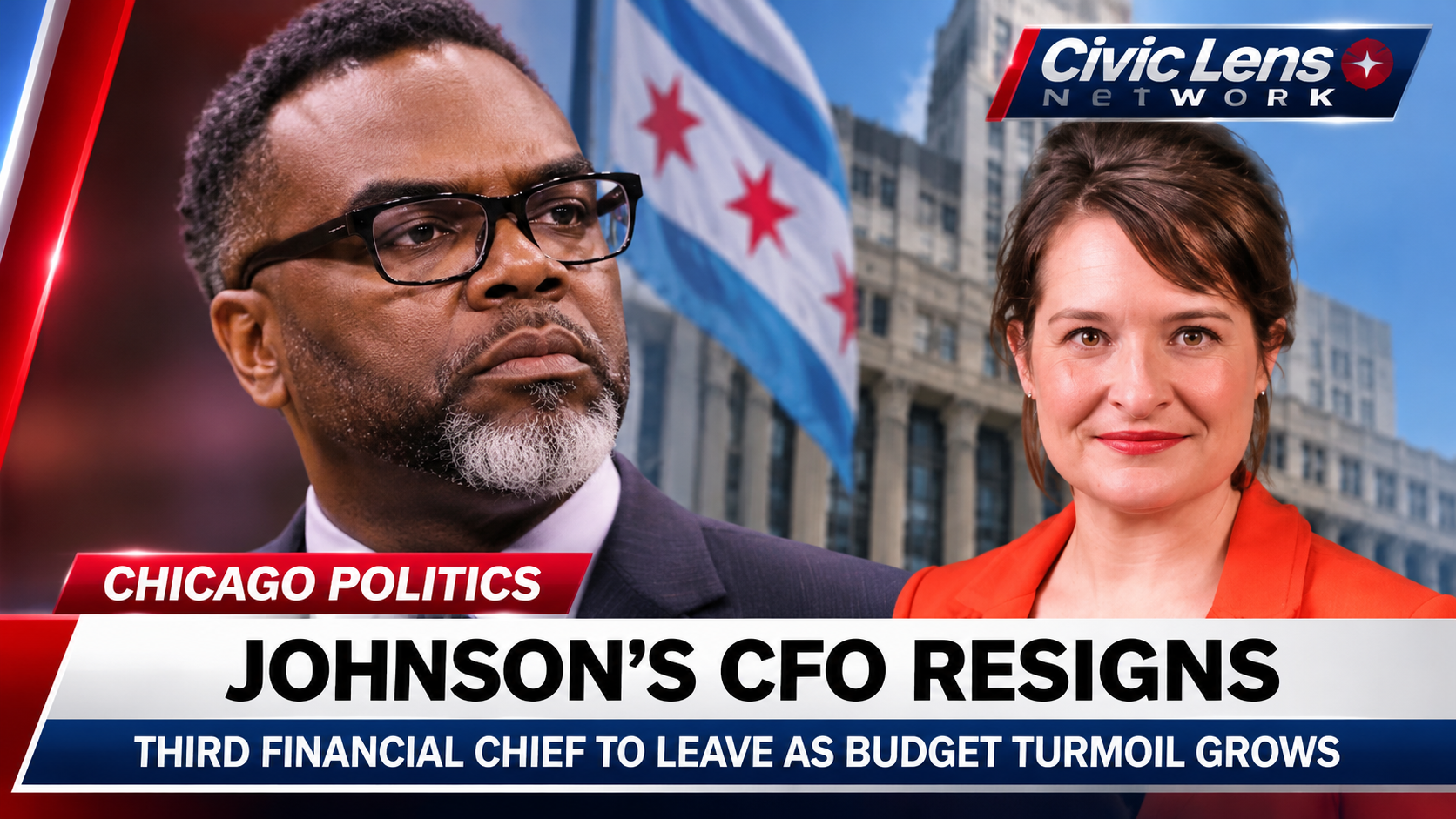
Chicago Mayor Brandon Johnson’s administration is facing another political firestorm after the city’s chief financial officer abruptly resigned, declaring that remaining in her position would compromise her professional integrity and responsibilities to taxpayers.
Ashlee Gabrysch, who had served as Chicago’s top financial officer for just three months, submitted her resignation Friday, November 13, 2026, amid growing disagreements over the city’s financial condition and Johnson’s proposed $17.6 billion budget.
Her departure marks the third chief financial officer to leave Johnson’s administration within a year, raising serious questions about leadership, financial transparency and the stability of Chicago’s government.
A Resignation That Raises Serious Questions
Gabrysch did not simply announce that she was pursuing another opportunity or stepping away for personal reasons. Instead, she issued a statement questioning whether she could continue fulfilling her obligations under the conditions imposed upon her.
“The Chief Financial Officer’s statements about city finances are not idle chatter: they are relied upon by investors, ratings agencies, City Council, and taxpayers,” Gabrysch wrote.
She emphasized that the city’s top financial official has an obligation to ensure financial information is accurate and complete.
“It has become apparent, however, that to continue in this role would be to compromise my integrity and professional obligations,” she stated.
Those words immediately raised concerns among Chicago aldermen, particularly because Gabrysch had recently challenged the mayor’s presentation of the city’s financial situation.
Her resignation came during one of Chicago’s most difficult budget negotiations, with city officials struggling to address hundreds of millions of dollars in projected deficits.
CFO Contradicted Johnson’s Budget Claims
The dispute between Gabrysch and the mayor’s administration became publicly apparent during City Council budget hearings.
Johnson had promoted his proposed spending plan by claiming that approximately 76% of the measures used to close Chicago’s projected $882 million budget shortfall represented structural financial solutions.
Structural changes are particularly important because they provide continuing financial improvements rather than temporary measures that merely postpone financial problems.
Gabrysch challenged that assessment.
During testimony before aldermen, she explained that only approximately 56% of the proposed solutions qualified as structural improvements.
The disagreement centered partly on the administration’s decision to borrow money to cover settlements related to police misconduct.
Borrowing money may address an immediate expense, but it does not permanently eliminate the underlying financial obligation. It also creates debt that taxpayers must eventually repay.
The difference between the mayor’s 76% claim and his CFO’s 56% assessment became a major point of contention.
For taxpayers already concerned about Chicago’s financial future, the disagreement raised an obvious question: Which financial picture accurately represents the city’s condition?
Allegations of Misleading Financial Information
The controversy intensified after Alderman Bill Conway, vice chairman of the City Council Finance Committee, called for an immediate investigation into the circumstances surrounding Gabrysch’s departure.
Conway argued that her resignation suggested she had been pressured to provide inaccurate financial information.
He warned that misleading financial statements could potentially expose the city to serious legal and financial consequences.
Chicago regularly borrows money through municipal bonds, making the accuracy of its financial disclosures particularly important to investors and credit-rating agencies.
An investigation would need to establish whether any officials actually directed Gabrysch to misrepresent financial information. Her resignation and the public disagreement over budget figures do not, by themselves, establish criminal wrongdoing.
Nevertheless, the possibility that Chicago’s own chief financial officer believed she could no longer meet her professional obligations has intensified demands for independent scrutiny.
Johnson Administration Fires Back
Rather than accepting Gabrysch’s criticism, Johnson’s administration responded with allegations concerning her own conduct.
The mayor’s office accused Gabrysch of being largely absent during important periods of budget preparation.
More seriously, the administration alleged that she directed the city treasurer to issue a $75 million payment without the necessary legal authorization.
According to the mayor’s office, Gabrysch attempted to authorize the payment before legislation approved by the City Council on November 2 had officially taken effect.
The administration announced that it would refer the matter to Chicago’s Office of Inspector General for independent review.
Gabrysch rejected the administration’s response, accusing officials of attempting to divert attention from the financial concerns she had raised.
She characterized the attacks against her as disappointing but unsurprising and maintained that she stood behind her original statement.
The competing accusations have transformed what might otherwise have been another senior personnel departure into a broader controversy over the management of taxpayer money.
Three CFO Departures in One Year
Gabrysch’s resignation is particularly troubling because it follows a series of departures from Johnson’s financial leadership team.
Former CFO Jill Jaworski left the administration in January. Her replacement, Steven Mahr, subsequently departed in August, followed by Gabrysch just three months later.
Chicago has also experienced turnover among other senior officials responsible for managing the city’s finances.
Frequent changes in financial leadership can complicate budget planning, weaken institutional continuity and raise concerns among investors evaluating the city’s ability to manage its obligations.
Gabrysch brought substantial financial experience to the position, having previously worked as a senior director at Fitch Ratings, where she analyzed the finances of Chicago and Illinois.
Her background made her particularly familiar with the city’s longstanding financial challenges, including approximately $36 billion in pension-related liabilities.
That experience also makes the circumstances of her resignation difficult to dismiss as an ordinary political disagreement.
Calls Grow for an Independent Audit
City Council Finance Committee Chair Pat Dowell has called for an independent audit of Chicago’s finances following the resignation.
Other aldermen have demanded public hearings to determine whether the administration’s budget projections accurately reflect the city’s financial condition.
The controversy arrives as Johnson faces significant resistance to his proposed 2027 budget, with numerous aldermen already expressing opposition to the spending plan.
Johnson has defended his administration and maintained that Chicago’s finances remain under responsible management.
City Comptroller Michael Belsky has been appointed acting chief financial officer while the administration searches for a permanent replacement.
But appointing another financial official will not resolve the questions raised by Gabrysch’s departure.
Chicago Taxpayers Deserve Answers
Chicago’s financial difficulties did not begin with Brandon Johnson. The city has struggled with pension obligations, borrowing costs and budget pressures across multiple administrations.
However, Johnson is now responsible for managing those problems, presenting accurate financial information and maintaining a leadership team capable of carrying out that responsibility.
The resignation of three chief financial officers within a single year is a serious warning sign for any major American city.
When the official responsible for safeguarding financial integrity leaves office while publicly questioning the conditions under which she was expected to serve, taxpayers deserve more than competing accusations from City Hall.
They deserve an independent examination of the budget figures, the disputed $75 million payment and the circumstances that led an experienced financial professional to resign.
The central question is no longer simply whether Johnson can secure enough votes to pass his budget.
It is whether Chicago residents, investors and elected officials can trust the financial information being presented by his administration.
Until those questions are answered, the latest resignation will remain another significant challenge to Johnson’s leadership and his administration’s credibility.