Federal investigators examining Democratic Rep. Ilhan Omar have questioned a $10,000 financial transaction involving the Minnesota congresswoman and the brother of a man who briefly served on her security detail, according to newly published reporting that provides another look inside the ongoing investigation.
The disclosure comes as federal prosecutors face questions about their treatment of Abdullahi Mohamud Mohamed, a former security guard who was charged with making false statements during an immigration proceeding before being questioned about Omar and appearing before a federal grand jury.
The case has drawn attention because investigators were reportedly interested in more than Omar’s immigration history. They also questioned a financial transaction that Mohamed’s attorney said prosecutors had raised as a possible bribe.
The payment has not been publicly established as illegal, and Omar’s office has described the transaction as a loan.
The $10,000 Transaction
According to reporting published November 11 by the Minnesota Star Tribune and additional reporting from the New York Times, federal investigators questioned Mohamed about a $10,000 payment involving Omar and one of his brothers.
Mohamed’s attorney, Bruce Rivers, said investigators wanted to know whether the payment was connected to arranging contact with Somali officials.
That inquiry raises questions about the circumstances surrounding the transaction, including why the payment was made, what relationship existed between the parties and whether investigators have documentation supporting their suspicions.
Omar’s spokesperson, Jackie Rogers, has maintained that the money was connected to a loan.
The publicly available reporting does not establish whether the payment originated directly from Omar, whether it was documented in a written loan agreement or whether investigators obtained banking records supporting a different explanation.
Those distinctions matter because a financial transaction between public officials and private individuals is not automatically improper. Determining whether a payment was a legitimate loan, reimbursement or unlawful exchange requires evidence concerning its purpose and the expectations of the people involved.
No public bribery charge has been announced in connection with the reported $10,000 transaction.
A Former Security Guard Becomes a Federal Witness
Mohamed’s involvement with Omar reportedly dates to a 2022 trip to Somalia, when he briefly served as part of her security detail.
His attorney has said the assignment was limited and that Mohamed did not maintain a close relationship with the congresswoman.
Years later, Mohamed became the subject of an immigration-related criminal prosecution of his own.
Federal prosecutors charged him in April 2026 with making false statements to government officials during an October 2025 interview connected to his application for permanent residency.
The case initially appeared to concern Mohamed’s own immigration status. However, Rivers says federal officials repeatedly questioned his client about Omar while the prosecution was pending.
According to the attorney, investigators asked about Omar’s personal history, family relationships, immigration background and financial dealings.
Rivers said his client lacked the detailed knowledge investigators appeared to be seeking.
The attorney’s account suggests prosecutors viewed Mohamed as a possible source of information because of his previous association with Omar, even though that association had been relatively brief.
Questions About Cooperation and Deportation
One of the more unusual allegations concerns what federal officials reportedly offered Mohamed in exchange for information.
Rivers said investigators discussed intervening in his immigration situation to prevent deportation if he supplied damaging information about Omar.
The attorney also alleged that prosecutors repeatedly described the investigation as originating from the White House.
Those allegations have not been independently established through publicly released records.
The Justice Department has disputed any connection between Mohamed’s criminal prosecution and its ongoing investigations, saying his case was unrelated.
Rivers characterized the government’s conduct as an attempt to pressure his client into becoming an informant.
Such claims raise a separate legal issue from the allegations involving Omar: whether investigators appropriately handled a potential witness who was simultaneously facing criminal prosecution and possible removal from the United States.
Cooperation agreements and immigration-related considerations can arise in federal investigations. The central question in this case is whether any proposed arrangement was lawful and whether the attorney’s account accurately reflects what prosecutors said.
Grand Jury Testimony Followed by Dismissal
In September, Mohamed appeared before a federal grand jury in Washington, D.C.
According to Rivers, prosecutors questioned him about matters similar to those previously raised during meetings with investigators.
The attorney said Mohamed provided little substantive information because he did not possess the knowledge officials wanted.
The following day, federal prosecutors moved to dismiss the criminal case against Mohamed.
In their filing, prosecutors cited his anticipated removal from the United States, explaining that continuing the prosecution no longer served a federal interest.
That stated reason differs from Rivers’ suggestion that the prosecution was connected to efforts to obtain testimony about Omar.
The timing of the dismissal has attracted scrutiny, but the available evidence does not establish that prosecutors dropped the charges as a reward for cooperation or because Mohamed failed to provide incriminating information.
Mohamed has not publicly provided a detailed independent account of the meetings described by his attorney.
The Broader Investigation Into Omar
The new disclosures follow an October 12 search of Omar’s Washington, D.C., residence by federal agents.
Authorities executed a judicially authorized search warrant as part of a criminal investigation involving allegations related to immigration paperwork.
Investigators seized electronic devices and other materials, including Omar’s phone, and issued grand jury subpoenas involving people close to the congresswoman.
Reporting indicates that federal authorities have examined allegations concerning Omar’s family immigration history, including longstanding claims about a previous marriage.
Omar has repeatedly denied allegations of immigration fraud.
The congresswoman became a naturalized American citizen in 2000 after arriving in the United States as a refugee from Somalia.
Federal officials have also acknowledged scrutiny involving Omar’s financial disclosures, although the precise relationship between the different investigative matters remains unclear.
The newly reported questions about the $10,000 transaction demonstrate that investigators have examined at least one financial matter beyond the immigration paperwork that initially dominated public coverage.
Whether prosecutors have identified evidence sufficient to support criminal charges remains unknown.
A Dispute Over the Search Warrant
Omar’s attorneys have challenged the October search, arguing that federal agents failed to follow safeguards intended to protect members of Congress and materials connected to legislative work.
They also questioned the decision to conduct the search shortly before the November midterm elections.
The Justice Department rejected those accusations and maintained that investigators complied with applicable court orders and legal obligations.
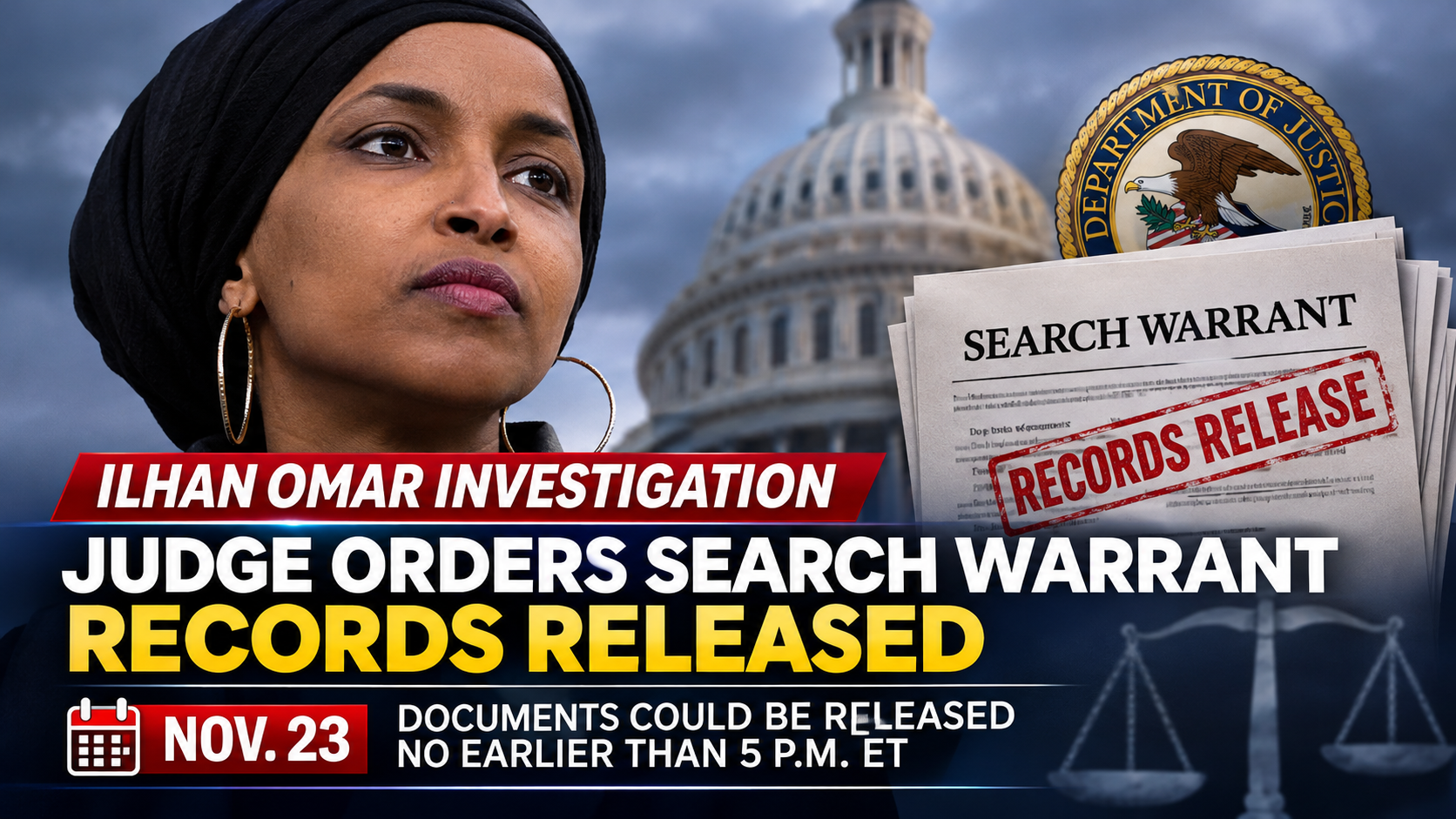
Another dispute concerns public access to the evidence used to obtain the search warrant.
In late October, prosecutors asked a federal judge to keep the warrant materials sealed, arguing that releasing investigative details could jeopardize the ongoing inquiry.
News organizations have sought disclosure of those documents, citing the substantial public interest surrounding an investigation of a sitting member of Congress.
The sealed materials could eventually clarify what evidence investigators presented to the court and which allegations formed the basis for the search.
Omar’s Response and the Unanswered Questions
Omar and her representatives have accused the Trump administration of using federal law enforcement to target a political opponent.
Her spokesperson described the alleged effort to obtain information from Mohamed through his immigration case as an abuse of government authority.
The Justice Department has rejected allegations that its investigative actions were improper.
Omar won reelection to a fifth congressional term on November 3 while the investigation remained unresolved.
The latest reporting leaves several important questions unanswered.
Investigators have not publicly explained the evidentiary basis for their questions about the $10,000 transaction. The precise financial records, if any, supporting their suspicions remain undisclosed.
The government has also not publicly established that Mohamed possessed information implicating Omar in criminal activity.
Meanwhile, his attorney’s account of pressure from federal officials has created questions about investigative tactics that may receive further scrutiny.
For now, the newly disclosed payment and grand jury testimony represent additional developments in a federal investigation whose ultimate outcome remains uncertain.
No criminal charges against Omar have been publicly announced, and the reported financial transaction has not been established as a bribe.
The next significant developments could come through additional court filings, the release of sealed warrant materials, further witness testimony or a formal prosecutorial decision.