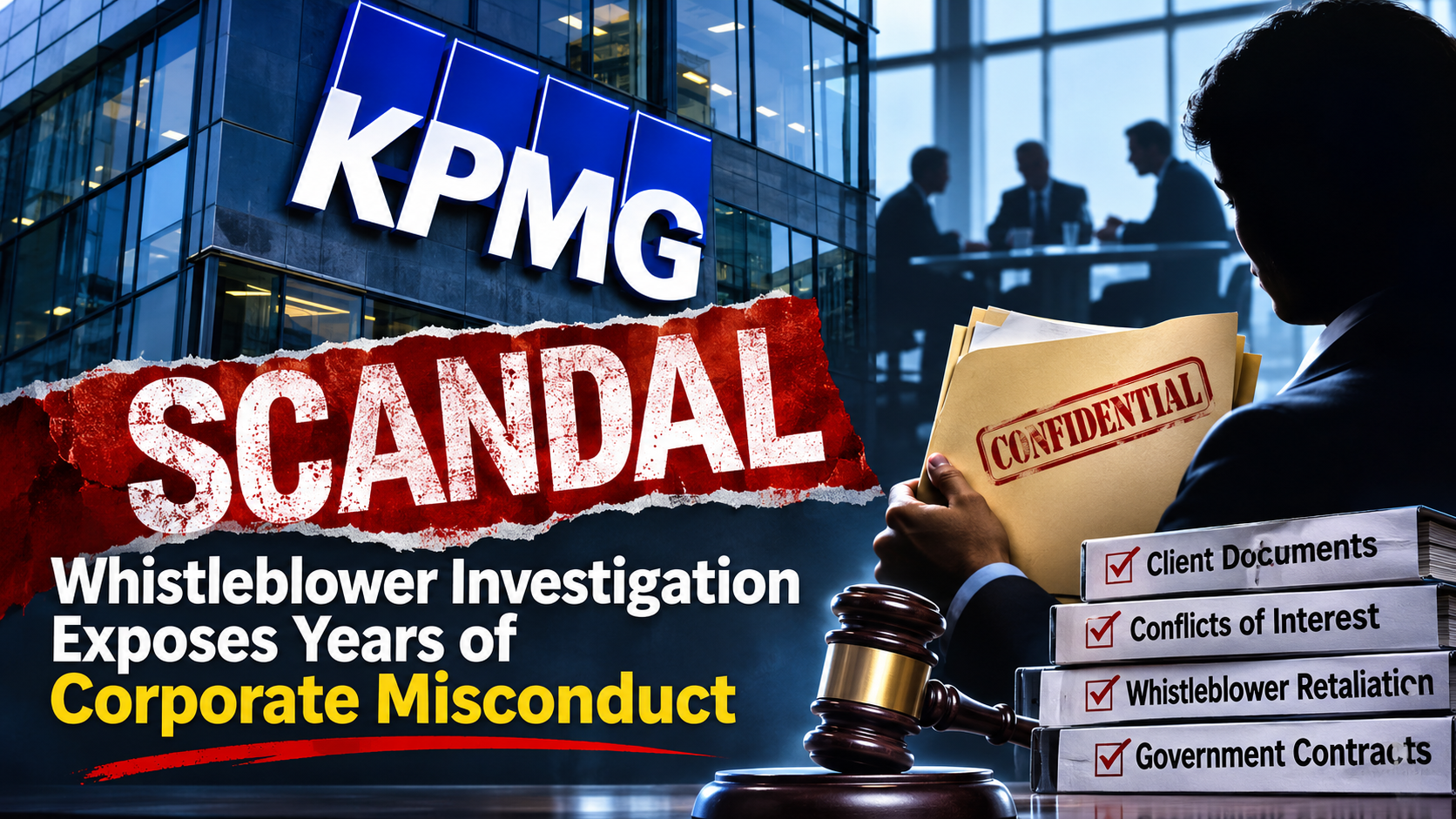
One of the world’s largest accounting firms is facing a major crisis after an independent investigation exposed years of governance failures, mishandled whistleblower complaints, and the misuse of confidential corporate information.
KPMG Australia, part of the global network of accounting giants responsible for auditing some of the world’s largest corporations, has been forced into sweeping leadership changes and government restrictions following revelations that raise serious questions about the integrity of the auditing industry.
The scandal has already cost senior executives their positions, damaged relationships with major corporate clients, and triggered investigations by Australian regulators.
Now, an independent government-commissioned review released October 22 has confirmed that KPMG’s handling of whistleblower allegations was deeply flawed.
And the consequences are far from over.
Confidential Corporate Documents at the Center of the Scandal
The controversy began with allegations that confidential information belonging to existing KPMG clients had been improperly shared within the accounting firm.
Among the most serious accusations were claims involving confidential board documents belonging to Australian property giant Lendlease.
According to allegations presented to Australia’s Parliament, information from those documents was used to support efforts to secure lucrative auditing contracts involving major companies, including Westpac and Dexus.
For an auditing firm, such allegations strike at the foundation of its business.
Corporations entrust auditors with confidential financial records, strategic planning documents, internal communications, and information that could affect billions of dollars in business decisions.
That access comes with an obligation to protect sensitive material from unauthorized disclosure and improper commercial use.
If confidential information obtained through one client relationship is used to pursue business with another company, the consequences extend beyond a simple breach of workplace policy.
It raises questions about professional independence, conflicts of interest, and whether corporations can trust the firms responsible for examining their financial records.
KPMG subsequently acknowledged instances in which client information had been improperly shared internally and confirmed disciplinary action against partners.
The Whistleblower Who Refused to Stay Silent
Perhaps the most troubling aspect of the scandal is what happened after concerns were raised.
A whistleblower attempted to alert KPMG leadership to alleged misconduct involving confidential client information.
Instead of promptly establishing the full extent of the allegations, the firm’s initial investigations concluded that the claims were unsubstantiated.
Those findings would later come under serious scrutiny.
In May 2026, KPMG publicly acknowledged that its original internal investigation lacked the necessary rigor.
An earlier external review had supported the internal findings, but subsequent scrutiny identified serious shortcomings in how the complaints were handled.
The whistleblower’s concerns ultimately reached Australian lawmakers, bringing the allegations into public view.
The situation became even more damaging when questions emerged about whether KPMG’s international leadership had done enough after receiving complaints.
The Financial Times reported that KPMG International declined requests to investigate allegations involving its Australian member firm, citing limitations on its authority and insufficient evidence.
The revelations raised an uncomfortable question for a global accounting network that promotes professional integrity.
If employees report potential wrongdoing involving powerful partners, who ensures those complaints receive an independent and thorough investigation?
Independent Review Exposes Years of Failures
The October 22 independent review, commissioned by Australia’s Department of Finance and conducted by former senior public servant Ian Watt, delivered particularly damaging conclusions.
Investigators found that KPMG mishandled the whistleblower’s allegations and allowed longstanding cultural and governance weaknesses to persist.
The review determined that the firm’s response was fragmented, prolonged, and lacked clear accountability at critical moments.
Rather than concentrating sufficiently on whether the allegations were accurate, KPMG had treated the situation largely as an employment issue, with significant attention given to legal exposure and organizational risk.
The investigation also found that KPMG had identified warning signs years earlier.
By 2020, internal concerns included excessive emphasis on financial returns, inconsistent ethical leadership, reluctance to challenge senior personnel, and barriers preventing employees from reporting misconduct.
Despite recognizing those problems, the firm had shown insufficient evidence of adequately correcting them.
These findings suggest the controversy was not simply the result of one questionable decision.
The independent review identified deeper weaknesses in the systems intended to prevent misconduct and protect employees who reported concerns.
Senior Executives Forced Out
The scandal produced dramatic changes within KPMG Australia’s leadership.
In May, chief executive Andrew Yates resigned, accepting responsibility for failures involving the handling of whistleblower allegations.
National audit leader Julian McPherson also stepped down and announced his departure from the firm.
The chairman subsequently departed as the crisis widened.
Other senior partners faced disciplinary consequences as investigations continued.
The departures represented a significant upheaval for one of Australia’s most influential professional services organizations.
But leadership resignations alone do not resolve the underlying concerns.
The larger question is whether the firm’s internal culture and oversight systems have changed enough to prevent similar conduct from occurring again.
Government Contracts Put on Hold
The financial consequences have also become substantial.
Australia’s federal government has extended restrictions preventing KPMG from bidding for new government contracts until the end of February 2027.
The decision followed the independent review, which concluded that KPMG should not be permanently excluded from government work but should not regain full confidence merely through promises of reform.
According to the review, federal government business accounted for approximately A$207.1 million, or 9.5 percent of KPMG Australia’s revenue during the 2026 financial year.
That makes the restrictions more than a symbolic reprimand.
They place a meaningful portion of the firm’s business under pressure while authorities assess whether promised improvements are actually working.
The government has emphasized that KPMG must demonstrate lasting behavioral and governance changes before confidence can be restored.
Hundreds of Complaints Across the Auditing Industry
The controversy has also expanded beyond KPMG.
During a September parliamentary hearing, Australia’s corporate regulator revealed that the country’s four largest accounting firms had collectively reported 551 complaints concerning alleged audit misconduct.
Those firms include KPMG, Deloitte, PwC, and EY.
The Australian Securities and Investments Commission emphasized that the complaints were not necessarily all serious or substantiated.
Nevertheless, the volume of reports has intensified questions about oversight across an industry entrusted with enormous amounts of confidential corporate information.
Regulators are examining whether additional investigations or enforcement actions are warranted.
The broader concern is whether existing professional safeguards are sufficient when the same firms compete aggressively for lucrative corporate and government contracts.
The Whistleblower Protection Problem
Another consequence of the controversy involves KPMG’s own whistleblower reporting business.
The firm operates a service called FairCall, which organizations have used to receive reports of suspected wrongdoing.
In August, KPMG announced it would stop offering the service to companies it audits.
The firm attributed the decision to changes in Australian auditing standards that create independence concerns when auditors assess whistleblower systems they also operate.
However, the decision arrived amid intense scrutiny of KPMG’s own failures to properly handle whistleblower allegations.
The situation highlights an important problem.
An organization responsible for helping other companies identify misconduct must also demonstrate that its own reporting systems function effectively.
Otherwise, the credibility of those services can be seriously undermined.
KPMG Promises Major Reforms
KPMG has acknowledged significant failures and announced changes intended to rebuild confidence.
In October, the firm unveiled an updated reform plan that includes establishing an Integrity Office and appointing a whistleblower protection officer.
Additional measures include stronger independent oversight, changes to governance arrangements, and improvements in how allegations are investigated.
The firm has also accepted the findings of the government-commissioned review.
KPMG says rebuilding confidence requires evidence of genuine, lasting change rather than public assurances alone.
Those commitments will now face scrutiny from regulators, government officials, corporate clients, and employees.
A Scandal With Global Implications
Although the controversy centers on Australia, the questions it raises are relevant far beyond one country.
The world’s largest accounting firms operate across international markets and provide services to major corporations, banks, investment funds, and government agencies.
Their reputations depend on independence, confidentiality, and public confidence in the reliability of their work.
When those safeguards fail, the consequences can extend to investors, taxpayers, employees, and the broader financial system.
The KPMG controversy illustrates how commercial pressure, inadequate oversight, and mishandled internal complaints can combine to create a major institutional crisis.
It also demonstrates the importance of whistleblowers willing to challenge powerful organizations, even when their concerns are initially dismissed.
For KPMG Australia, the immediate challenge is demonstrating that its reforms are more than changes on paper.
For regulators, the challenge is determining whether existing accountability mechanisms are strong enough to detect misconduct before it becomes a public scandal.
And for the corporations and governments that rely on the auditing industry, the question is straightforward.
Can the firms entrusted with protecting confidential financial information prove they are capable of protecting the public’s trust?
The answer will depend not on corporate promises, but on what independent investigators, regulators, and future oversight reveal.