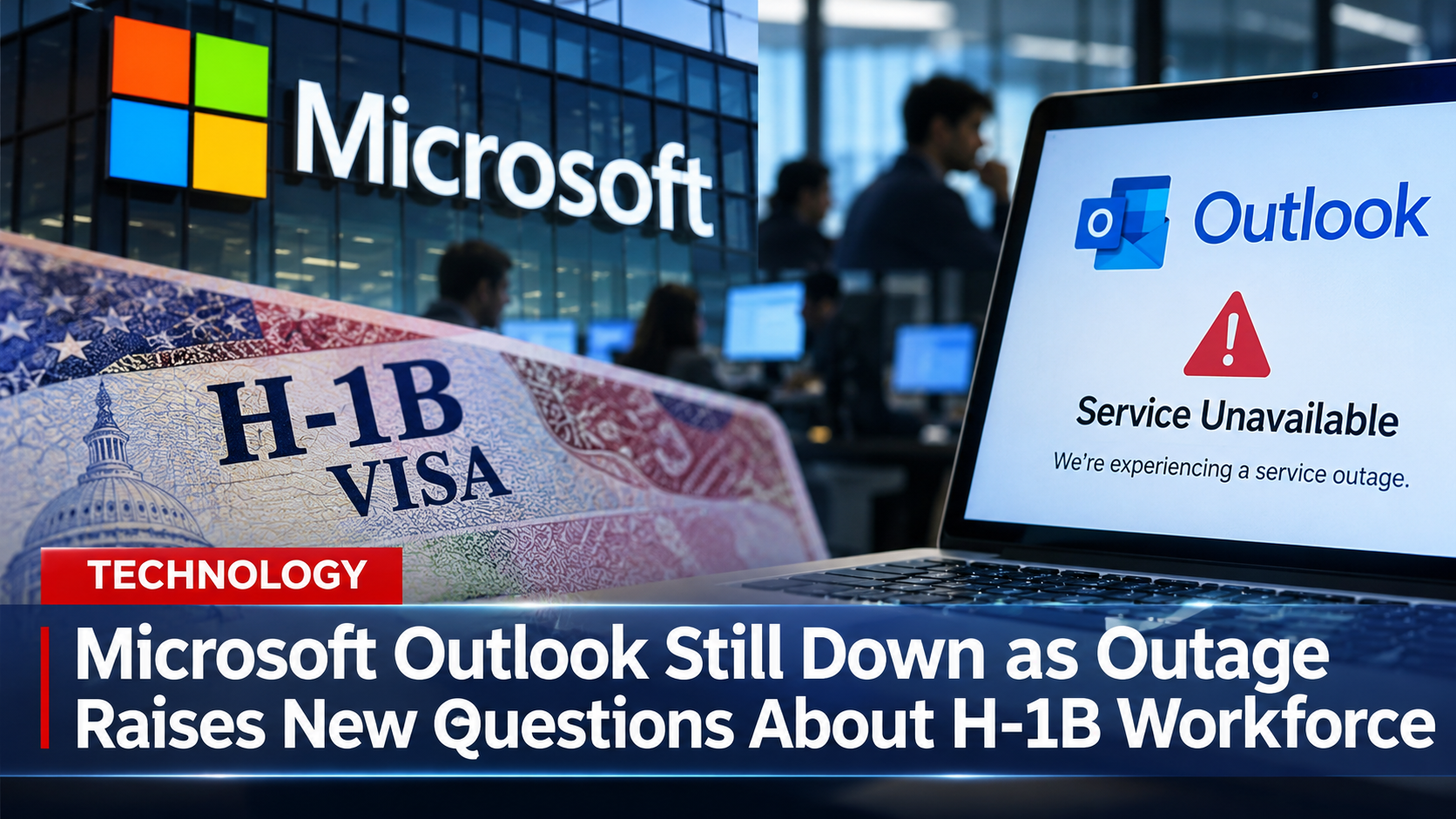
Microsoft is facing mounting scrutiny after a massive global outage left millions of people struggling to access Outlook email, Microsoft Teams and other essential workplace services for more than 24 hours.
By Friday, November 13, the technology giant was reporting progress toward restoring its systems, but customers continued experiencing intermittent access problems and delayed email deliveries.
For businesses, government agencies and ordinary Americans who depend on Microsoft’s products, the disruption has raised an uncomfortable question: How can one of the world’s largest and wealthiest technology companies allow such a widespread failure to continue for so long?
The outage began Thursday afternoon, initially affecting users across the United States before spreading internationally. Outlook users reported being unable to open their inboxes, send messages or receive important communications.
The disruption eventually affected Microsoft Teams, SharePoint, Copilot and other cloud-based services used by businesses and public institutions.
According to outage-monitoring reports, complaints emerged from 74 countries and territories, demonstrating how extensively Microsoft’s infrastructure supports modern communications.
Microsoft initially identified problems involving elevated infrastructure loads and servers that unexpectedly became unavailable during automated health checks.
The company later explained that a technical problem arose during an upgrade following a network change. Recovery efforts involved stabilizing affected servers and gradually restoring services.
Microsoft has said there is no indication that the incident resulted from a cyberattack or malicious activity.
By Friday, the company reported that email queues were approaching normal levels, although it warned that some users could continue experiencing delays.
The consequences extended well beyond frustrated office workers.
In Britain, a court proceeding in Manchester was interrupted because of technical problems. Police departments experienced difficulties receiving online reports, while pharmacies warned that prescription processing could be delayed.
Government agencies in several countries also reported interruptions to their communications systems.
The incident demonstrates the enormous influence a handful of technology corporations now exercise over critical infrastructure.
When Microsoft’s systems fail, the consequences can extend to law enforcement, medical services, banking operations and government administration.
That level of dependence makes reliability more than a customer-service issue.
It becomes a matter of economic stability and public safety.
Questions About Microsoft’s Workforce
The outage also comes at a time when American technology companies face increasing criticism over their hiring practices, outsourcing arrangements and reliance on foreign workers through the H-1B visa program.
The H-1B program allows American employers to hire qualified foreign professionals for specialized occupations, including software engineering, cybersecurity and information technology.
Supporters argue that the program helps companies recruit technical talent and remain competitive internationally.
Critics contend that some employers use the system to reduce labor costs, replace American workers or create dependence on staffing arrangements that can undermine long-term institutional knowledge.
Those concerns deserve examination, particularly when companies responsible for essential infrastructure experience major operational failures.
Microsoft has not identified the employees responsible for the technical changes associated with the disruption, nor has it attributed the incident to any particular category of workers.
The more relevant questions concern how Microsoft organizes its engineering teams, supervises infrastructure changes, tests updates and maintains emergency recovery procedures.
If a company relies heavily on contractors, temporary staffing or internationally distributed engineering teams, customers have a legitimate interest in understanding whether those arrangements affect system reliability.
That question applies equally to American-born employees, foreign workers, contractors and corporate executives.
An engineering failure cannot be explained simply by identifying where an employee was born.
But neither should Microsoft’s hiring practices, management decisions or technical oversight be considered beyond public scrutiny.
Who Is Accountable When Critical Systems Fail?
Microsoft’s enormous financial resources make the prolonged disruption particularly difficult for customers to accept.
The company operates some of the world’s most important cloud computing infrastructure and serves hundreds of millions of paying commercial subscribers.
Businesses purchasing these services expect reliable communications, effective backup systems and prompt recovery when failures occur.
The latest outage raises questions about whether Microsoft’s infrastructure has become too interconnected and whether its emergency safeguards are adequate.
A technical failure affecting one group of servers should not easily develop into a disruption spanning multiple products and continents.
Yet the company’s recovery efforts were complicated by problems bringing affected systems back online.
That suggests the need for a detailed examination of Microsoft’s infrastructure design, testing procedures and incident response capabilities.
Customers also deserve to know whether the company will provide service credits or other compensation for prolonged disruptions.
For organizations that lost business opportunities, missed communications or experienced operational delays, an apology may offer little reassurance.
A Larger Debate Over American Technology
The incident also highlights the continuing debate over the future of America’s technology workforce.
Major technology companies have spent years arguing that access to international talent is essential to innovation.
At the same time, American technology workers have raised concerns about layoffs, outsourcing and competition for specialized positions.
Those issues are legitimate subjects for congressional oversight.
Lawmakers could examine whether companies operating critical infrastructure maintain sufficient experienced engineering personnel, provide adequate training and preserve the institutional knowledge necessary to respond to emergencies.
They could also review whether existing workforce arrangements encourage long-term reliability or prioritize short-term cost reductions.
Such an investigation would require actual staffing records, engineering evidence and testimony rather than assumptions about employees’ immigration status.
For now, Microsoft’s immediate responsibility is restoring service and explaining what went wrong.
The company has reported progress, but the full consequences of the outage and the effectiveness of its corrective measures remain under examination.
Millions of customers depend on Microsoft to keep their communications running.
They have every reason to demand answers about how the failure happened, why recovery took so long and what will prevent another worldwide disruption.
The larger issue is not simply who works at Microsoft.
It is whether the people managing one of the world’s most important technology companies are doing enough to protect the customers who depend on it.