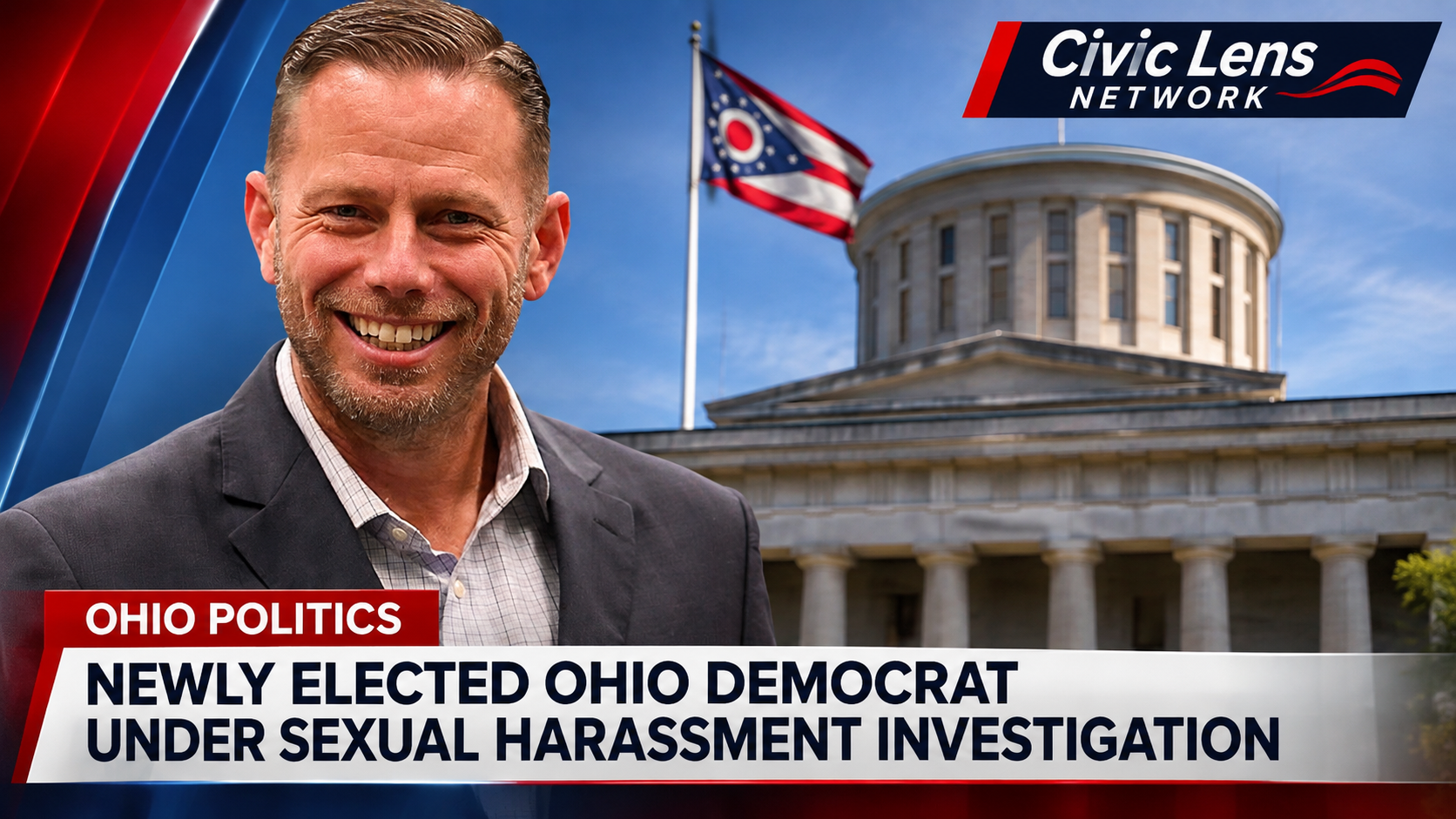
A newly elected Democratic congressman from Ohio is facing a sexual harassment investigation just days after winning a closely watched congressional race, raising questions about what Democratic Party officials knew before Election Day and how allegations involving their own candidates are handled.
Brian Poindexter, who defeated Republican incumbent Max Miller in Ohio’s 7th Congressional District on November 3, is now the subject of an independent investigation commissioned by the Democratic Congressional Campaign Committee (DCCC).
The allegations involve comments Poindexter allegedly made to a female campaign worker. Although the full details have not been publicly disclosed, the controversy has already prompted two Democratic political organizations to withdraw their endorsements.
The investigation comes at an awkward moment for Democrats, who are preparing to take control of the House of Representatives in January following their victories in the midterm elections.
Democratic Organizations Withdrew Support Before Election Day
One of the most significant developments is that concerns about Poindexter’s conduct reportedly reached Democratic political organizations before voters went to the polls.
The Blue Dog PAC and the Congressional Progressive Caucus PAC confirmed that they became aware of the allegations during the final days of the campaign.
Both organizations subsequently withdrew their endorsements of Poindexter and notified the DCCC.
However, the organizations did not publicly explain their decisions at the time.
In a joint statement, they explained that the woman involved had requested confidentiality because she did not want her identity revealed and wanted an opportunity to determine how to proceed.
The organizations said they respected her wishes while also deciding that continued political support would be inappropriate until the allegations could be investigated.
That explanation leaves an important distinction: Democratic organizations took action before the election, but the allegations did not become widely public until after Poindexter had secured his congressional victory.
Whether additional party officials were aware of the complaint before Election Day, and what information was available to them, remain questions deserving scrutiny.
Poindexter Campaign Calls Incident an Innocent Compliment
Poindexter’s campaign has acknowledged that an interaction occurred but disputes the characterization of the incident as intentional harassment.
According to a campaign spokesperson, Poindexter made what he believed was an innocent compliment to a female volunteer.
The spokesperson said Poindexter later learned that the remark had made the woman uncomfortable and felt badly about the situation.
The campaign also confirmed that it hired an outside human resources firm to review the matter.
That explanation has not resolved the controversy.
The woman has not publicly detailed her allegation, and investigators have not released findings establishing whether Poindexter violated any workplace or campaign conduct standards.
The distinction matters. An allegation warrants investigation, but it does not establish guilt.
Democratic Campaign Committee Orders Independent Investigation
The DCCC confirmed that it retained an independent third-party firm to investigate the complaint, conduct interviews and establish the facts.
DCCC Executive Director Julie Merz said the organization takes the allegations seriously and wants a swift, thorough and transparent investigation.
The committee has indicated that it will provide additional comment once the review is completed.
Meanwhile, the woman who raised the complaint has reportedly received assistance from legal advocates and support organizations.
Cheyenne Hunt, whose organization Reckoning Action is assisting the woman, said the complaint came from a lower-level campaign worker who contacted her shortly before the election.
House Democratic leader Hakeem Jeffries has also been informed of the allegations.
The controversy has already affected Poindexter’s standing within Democratic political circles. He was reportedly excluded from orientation activities organized by the Congressional Progressive Caucus.
A Campaign Built Around Allegations Against His Republican Opponent
The political circumstances surrounding the investigation are particularly striking because misconduct allegations played a major role in the congressional race Poindexter just won.
His Republican opponent, Max Miller, faced serious domestic violence allegations made by his former wife, Emily Moreno.
Those allegations included claims of physical violence and threatening behavior. Miller has denied wrongdoing.
Poindexter repeatedly highlighted the accusations against Miller during the campaign, making questions about his opponent’s personal conduct part of his argument for replacing the Republican incumbent.
He ultimately defeated Miller by nearly 10 percentage points, flipping a Republican-held congressional seat.
Now, less than two weeks after the election, Poindexter is confronting allegations involving his own conduct.
The accusations against the two politicians are different in nature and severity, and neither should be treated as proven merely because an allegation has been made.
Nevertheless, the circumstances create an uncomfortable political contrast.
A candidate who made allegations against his opponent a prominent campaign issue is now facing scrutiny over his own behavior.
Questions About Accountability and Political Transparency
The controversy raises broader questions about how political organizations respond when misconduct allegations threaten candidates they support.
Democratic groups have emphasized their decision to withdraw endorsements and initiate an independent investigation.
Those steps demonstrate that the complaint was not simply dismissed.
However, the timing also presents a legitimate question about political transparency.
Voters were asked to choose between two candidates in a race where personal conduct had become a major issue. Yet information about the complaint involving Poindexter did not become widely known until after the election.
The woman’s request for confidentiality provides an important explanation for why the organizations did not publicize the allegations.
Protecting a complainant’s privacy and providing voters with relevant information are both significant responsibilities. Balancing those obligations can become particularly difficult during a high-stakes election.
The investigation may clarify what happened during the campaign, but it may not resolve every question about the political decisions made before Election Day.
What Happens Next?
Poindexter is scheduled to take office on January 3, 2027, when the new Congress convenes.
As of November 16, there has been no announced finding of wrongdoing, and Poindexter has not indicated that he intends to surrender his congressional seat.
The DCCC has not publicly established a completion date for its investigation.
The outcome could affect Poindexter’s relationships with fellow Democrats, his standing within congressional organizations and his ability to begin his first term without the controversy overshadowing his work.
For Ohio voters, the immediate issue is whether the independent review will produce a clear account of what happened and whether political leaders will be transparent about its findings.
Democrats have promised a thorough investigation. The next test will be whether that promise produces answers, regardless of the political consequences.