LONDON — Britain is preparing one of its most significant immigration policy overhauls in decades, announcing sweeping new restrictions on permanent residency as public frustration continues over immigration, taxpayer spending and the strain on public services.
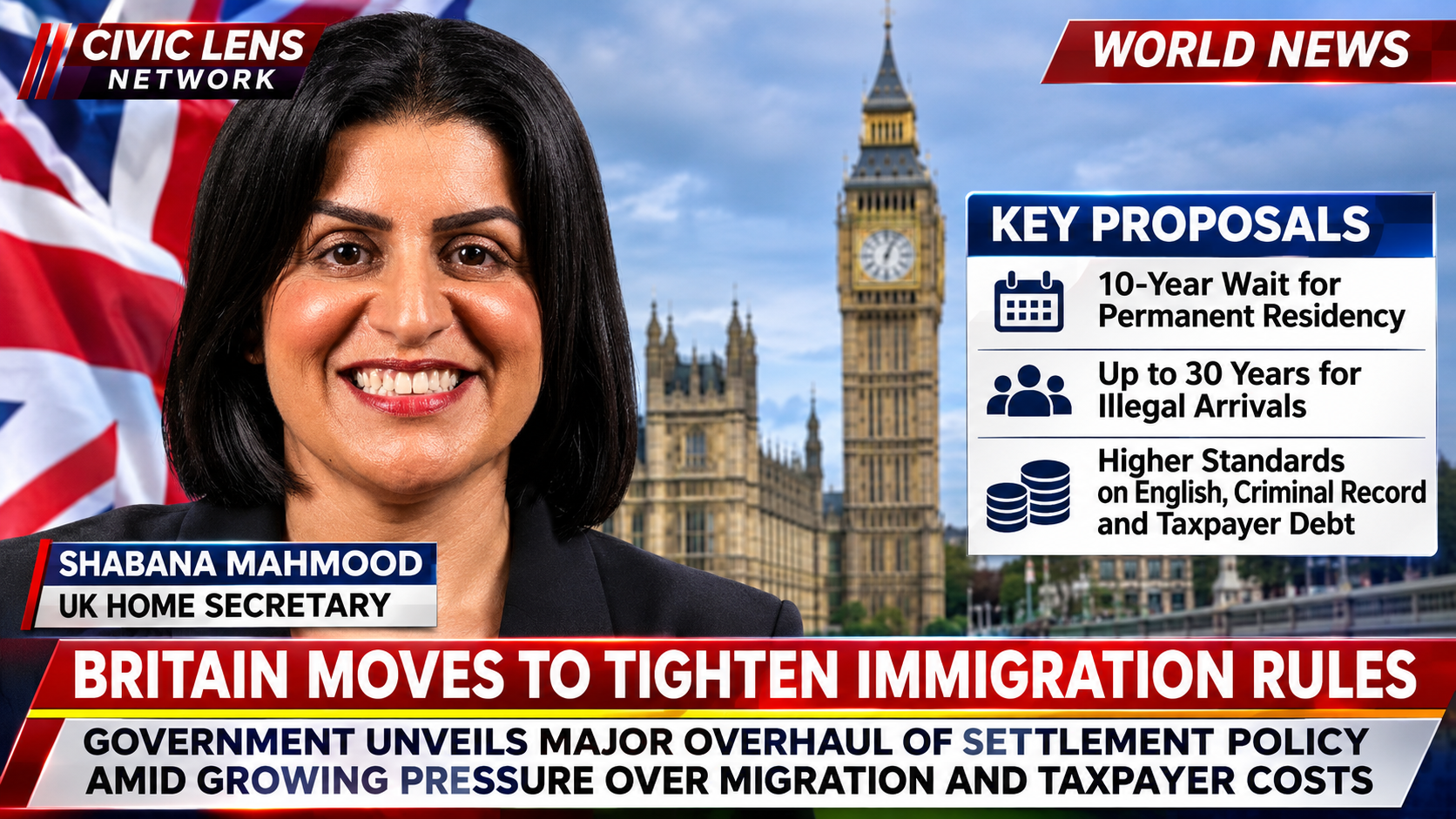
On Monday, November 2, Home Secretary Shabana Mahmood unveiled the government’s new Earned Settlement policy, which would end the standard five-year route to permanent residency for hundreds of thousands of migrants.
Under the proposed system, most migrants would have to wait at least 10 years before qualifying for permanent settlement, while individuals who violate immigration rules could face considerably longer waiting periods.
The government estimates that more than 500,000 people will have their settlement eligibility delayed, potentially reducing future welfare spending by billions of pounds.
The announcement marks a significant shift in Britain’s approach to immigration, placing greater emphasis on financial contribution, English language proficiency, criminal history and compliance with immigration law.
But it also raises an uncomfortable question for Britain’s political establishment: Why did it take years of growing public frustration before the government moved to impose these conditions?
PERMANENT RESIDENCY WILL NO LONGER BE BASED PRIMARILY ON TIME SPENT IN BRITAIN
For years, many foreign workers entering Britain through qualifying visa routes could apply for indefinite leave to remain after five years of lawful residence.
That status allows migrants to live and work in Britain without the usual time restrictions and generally provides access to public services and benefits, subject to eligibility rules.
The new policy would fundamentally change that arrangement.
Instead of treating five years of residence as the standard pathway, the government wants permanent settlement to depend on whether an individual has demonstrated a sustained contribution to British society.
Most qualifying migrants would face a 10-year waiting period.
Those earning more than approximately £50,000 annually, along with qualifying doctors, nurses, teachers and other public service workers, could remain eligible after five years.
High earners making more than approximately £125,000 annually and certain highly skilled migrants could qualify after just three years.
The government argues that individuals contributing more financially or providing essential public services should receive preferential treatment.
However, the new framework also creates a sharp distinction between high-income migrants and lower-paid workers, some of whom may have spent years building lives in Britain under the previous rules.
STRICTER REQUIREMENTS FOR CRIMINAL RECORDS, ENGLISH AND TAXPAYER DEBT
The proposed changes go beyond simply increasing waiting periods.
Migrants seeking permanent settlement would also have to satisfy four mandatory conditions.
Applicants would need to demonstrate a clean criminal record under stricter standards, English language ability at an advanced level, no outstanding qualifying debt to the taxpayer and a sustained history of National Insurance contributions.
The government also intends to impose additional restrictions on applicants who have relied on public benefits.
Individuals who received benefits would generally need to demonstrate five continuous years without claiming them before becoming eligible for settlement.
Those who violate immigration rules could face a minimum 20-year route to permanent residency.
These requirements represent an effort to establish clearer expectations for those seeking the right to remain in Britain permanently.
Supporters of stricter immigration controls have argued for years that permanent residency should require more than simply remaining in the country for a prescribed number of years.
The new policy reflects that argument, although its ultimate effectiveness will depend on enforcement.
SMALL BOAT ARRIVALS COULD FACE A 30-YEAR WAIT
Perhaps the most dramatic proposed changes concern refugees and individuals entering Britain through unauthorized routes.
Under the government’s plan, refugees arriving through approved safe and legal pathways could qualify for settlement after five years.
Other refugees would generally face a 20-year waiting period.
Individuals arriving through clandestine methods, including small boat crossings of the English Channel, could face an additional 10-year penalty.
That would create a potential 30-year route to permanent settlement.
The government says these restrictions are intended to discourage dangerous crossings and reduce incentives for unauthorized entry.
However, the distinction is important: a longer settlement waiting period does not automatically mean that a person granted refugee protection will be deported.
Britain would continue providing protection to qualifying refugees while their legal status and settlement eligibility remain subject to immigration rules.
Critics of the government’s broader immigration approach argue that longer waiting periods alone will not stop illegal crossings unless accompanied by effective border enforcement, faster asylum decisions and removal of individuals without a lawful right to remain.
That criticism highlights the difference between restricting permanent residency and actually reducing unauthorized arrivals.
BRITISH TAXPAYERS AND PUBLIC SERVICES AT THE CENTER OF THE DEBATE
One of the strongest arguments behind the overhaul concerns the financial responsibilities of the British government.
Housing, healthcare, education and public assistance all place demands on government budgets.
Immigration can generate tax revenue and help fill labor shortages, but its fiscal effects vary depending on employment, earnings, family circumstances and access to public services.
The government argues that delaying settlement for certain migrants will reduce future benefit eligibility and save billions of pounds.
Those projected savings have not yet been established through a completed public impact assessment.
Nevertheless, the policy signals an acknowledgment that immigration rules must consider long-term public spending.
For British citizens struggling with housing costs, healthcare waiting lists and rising living expenses, the question is not simply whether migrants contribute to the economy.
It is whether immigration levels and public spending commitments are being managed responsibly.
Permanent settlement grants significant rights, and those rights carry financial implications for the country offering them.
A government that fails to account for those implications risks undermining public confidence in the entire immigration system.
GOVERNMENT ADMITS ABUSE OF THE SOCIAL CARE VISA SYSTEM
The announcement also exposed serious problems involving Britain’s foreign worker sponsorship system.
Between 2022 and 2025, approximately 250,000 people and their dependants arrived in Britain or switched immigration status through the social care route.
Many filled genuine workforce shortages during a difficult period for Britain’s care sector.
However, the government acknowledged that the system was also exploited by employers sponsoring foreign workers for jobs that did not actually exist.
Officials say approximately 1,800 employers have lost their authorization to sponsor overseas workers because of exploitation or abuse.
The findings raise legitimate questions about how effectively the sponsorship system was supervised and whether warning signs were addressed quickly enough.
Under the revised settlement proposals, qualifying care workers who complied with their visa conditions and earned at least £25,000 annually would retain access to a five-year settlement route.
Other workers would face longer periods before qualifying.
The government says this adjustment recognizes the contributions of legitimate care workers without abandoning tougher standards for the wider immigration system.
LABOUR FACES PRESSURE FROM BOTH SIDES
The policy also illustrates the political pressure facing Britain’s Labour government.
Immigration has become a major issue for voters concerned about border control, population growth, housing availability and public spending.
Conservative critics argue that the government’s revised proposals do not go far enough and represent a retreat from earlier, tougher plans.
Others warn that changing settlement rules for people already living and working legally in Britain could be unfair.
The government previously considered requiring some lower-paid workers to wait 15 years before settlement.
That proposal has now been softened, with most workers instead facing a 10-year standard.
The revision followed a public consultation that attracted more than 200,000 responses.
While the government presents the changes as a balanced approach, the debate is unlikely to end with Monday’s announcement.
For critics demanding stronger immigration enforcement, a tougher settlement system is only one part of the solution.
For those concerned about legal migrants who followed existing rules, the possibility of changing requirements after arrival remains a major concern.
A COUNTRY RECONSIDERING ITS IMMIGRATION PRIORITIES
Britain’s latest announcement reflects a broader reassessment of immigration policy following years of exceptionally high migration.
Net migration peaked above 900,000 in 2023 before declining substantially.
For the year ending December 2025, net migration was approximately 171,000, demonstrating that migration levels have already fallen significantly.
Even so, the political consequences of the earlier surge remain.
Housing availability, pressure on local services and the government’s ability to enforce immigration law continue to influence public debate.
The Earned Settlement proposals represent an attempt to restore confidence by emphasizing responsibility and contribution.
Yet important questions remain unanswered.
Will the new requirements meaningfully reduce future taxpayer costs?
Will immigration authorities have sufficient resources to enforce the standards consistently?
Will the government distinguish effectively between genuine workers, refugees requiring protection and people who abuse immigration rules?
And will the proposed changes restore public trust without unfairly penalizing individuals who entered Britain legally under earlier requirements?
WHAT HAPPENS NEXT
The new framework was announced on November 2, but its principal settlement changes are expected to take effect in 2027 rather than immediately.
Detailed immigration rules and implementation arrangements will determine precisely how the policy applies to different categories of migrants.
The government has also promised further assessment of the economic and equality implications.
Existing holders of permanent settled status will not have that status revoked under the proposals.
For Britain, the larger issue is whether the government can translate tougher immigration language into effective, consistent enforcement.
The announcement establishes a clear new direction: permanent settlement would increasingly be treated as a privilege earned through lawful conduct, economic contribution and integration.
But policy announcements alone will not resolve Britain’s immigration challenges.
The real test will be whether the government can protect legitimate immigration pathways, enforce its borders, control public spending and demonstrate that the interests of British citizens remain central to national policymaking.