Britain’s Immigration Crisis Raises a Question Westminster Cannot Ignore: Who Comes First?
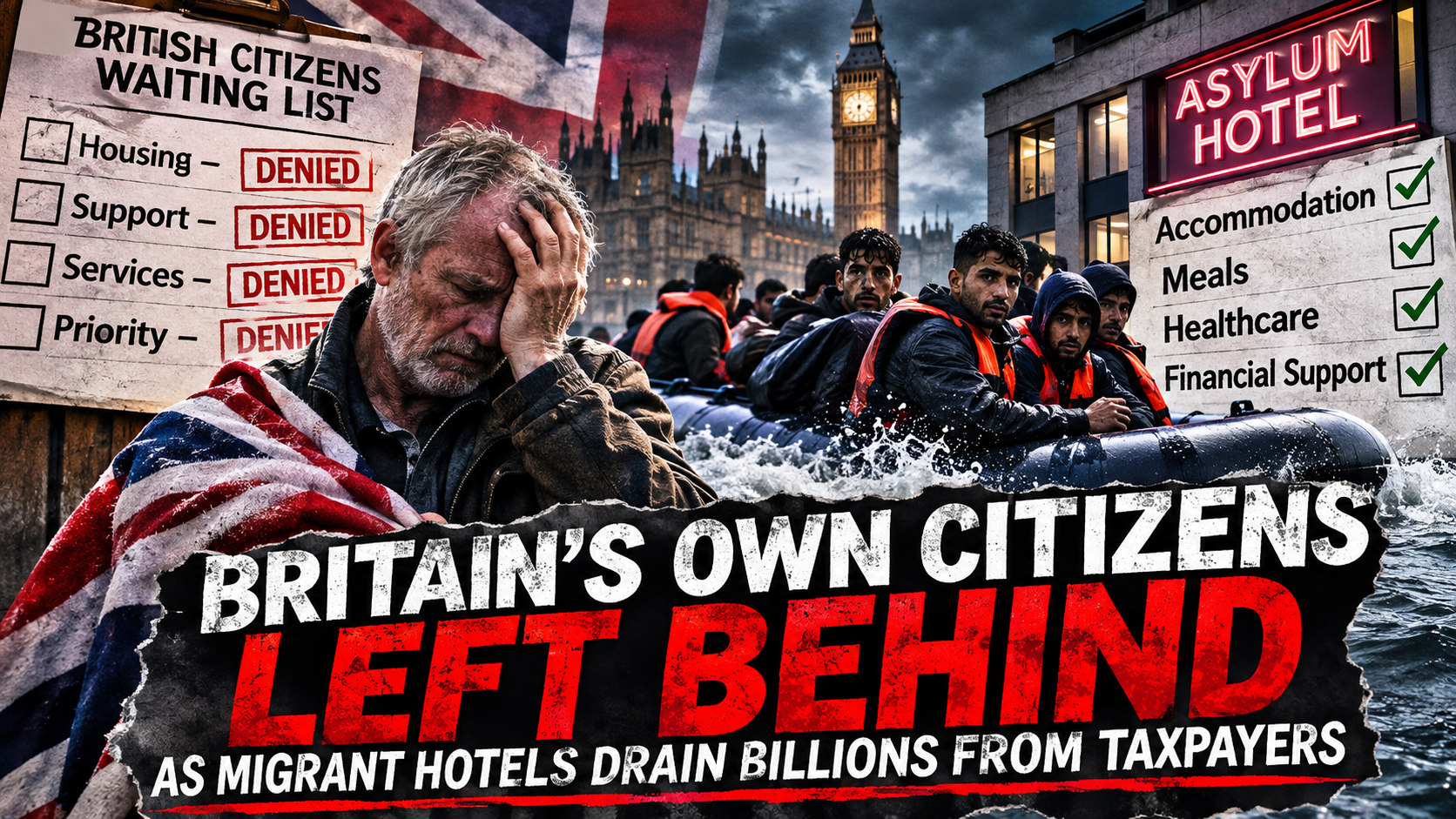
LONDON, UNITED KINGDOM — Across Britain, anger over illegal Channel crossings, taxpayer-funded migrant accommodation, and the rising cost of living has exposed a fundamental question about the British government’s responsibilities. When citizens struggle to afford housing, pensioners worry about heating their homes, and working families face mounting bills, why is the government spending billions maintaining an asylum accommodation system?
For many British citizens, this controversy is no longer simply about immigration. It is about whether the political establishment has lost sight of the people it was elected to represent.
Successive Conservative and Labour governments have promised to restore control over Britain’s borders. Yet the country continues to confront unauthorized crossings, expensive accommodation contracts, and fierce disagreements over how immigration laws should be enforced.
Billions Spent While British Families Struggle
The scale of spending has been extraordinary.
In March 2023, Fox News reported that Britain was spending approximately $2.8 billion annually accommodating asylum seekers in hotels.
Former Prime Minister Rishi Sunak subsequently highlighted the enormous daily cost, saying Britain was spending approximately £6 million each day on asylum hotels.
Those figures reflect the costs at the time, not the current daily spending rate. Nevertheless, they illustrate how an immigration enforcement problem developed into a multibillion-pound taxpayer obligation.
The question for Westminster is unavoidable: How did Britain reach a point where emergency hotel accommodation became such an expensive, long-running government operation?
And why should taxpayers accept repeated promises of reform without demanding measurable results?
For citizens struggling to secure affordable housing, the sight of government-funded accommodation for asylum seekers has become a powerful symbol of misplaced priorities.
That does not mean every asylum seeker receives luxury treatment or unrestricted benefits. It means the government has created an extraordinarily expensive system while many of its own citizens believe their needs are being overlooked.
Small Boats and the Failure of Border Control
The English Channel has become one of the most visible symbols of Britain’s immigration debate.
According to figures reported by Fox News, more than 45,000 people arrived by small boat in 2022, compared with approximately 28,000 in 2021 and 8,500 in 2020.
These crossings have raised serious questions about border security, people-smuggling networks, and the effectiveness of Britain’s asylum procedures.
Critics argue that a country cannot maintain public confidence in immigration law when unauthorized arrivals repeatedly overwhelm its processing and accommodation systems.
The issue is not whether Britain should offer refuge to people genuinely fleeing persecution. It is whether the government can distinguish legitimate protection claims from cases involving people who have no legal right to remain.
Without timely decisions, effective removals where legally justified, and meaningful action against smuggling networks, the system risks remaining trapped in a costly cycle.
British Communities Deserve a Voice
Immigration policy is often debated in Parliament, but its consequences are experienced in towns and neighborhoods far from Westminster.
Residents have raised concerns about hotels being converted into asylum accommodation, pressure on local infrastructure, and the lack of meaningful consultation before government decisions are implemented.
Businesses that once relied on hotel visitors can also face disruption when properties are removed from the tourism market.
Fox News previously reported that British officials acknowledged consequences including canceled weddings, reduced tourism opportunities, and additional pressure on communities.
These concerns deserve serious consideration rather than automatic dismissal.
Citizens who question public spending, immigration enforcement, or the use of hotels should be able to express those concerns without being presumed hostile toward every person seeking asylum.
At the same time, criticism of government policy must remain distinct from blaming entire nationalities or ethnic communities for decisions made by politicians and contractors.
Nigel Farage and the Demand for Sweeping Change
The immigration controversy has helped fuel support for Nigel Farage and Reform UK, which has advocated far more aggressive enforcement policies.
In August 2025, Fox News reported that Farage’s party proposed a sweeping deportation program involving an estimated 600,000 people, alongside major changes to Britain’s human rights framework.
The proposals included withdrawing from the European Convention on Human Rights and removing legal barriers that Reform UK argued were preventing effective immigration enforcement.
Supporters view these measures as necessary to restore national sovereignty and discourage unauthorized crossings.
Opponents argue that the proposals raise serious legal, financial, and humanitarian questions, including how removals could be conducted and whether receiving countries would cooperate.
Whatever one’s position, the proposals demonstrate how deeply immigration has reshaped British political debate.
The Government’s Responsibility to Its Citizens
A government has obligations to protect vulnerable people, uphold the law, and respect legitimate asylum claims. It also has an obligation to manage public money responsibly and protect the interests of the citizens it serves.
Those responsibilities should not be treated as mutually exclusive.
Britain’s existing residents are entitled to demand answers about housing shortages, public-service pressures, border enforcement, and the cost of asylum accommodation.
They are also entitled to ask whether private contractors have profited from a system that successive governments have failed to control.
The central issue is accountability.
How much longer will temporary accommodation remain necessary? How quickly are asylum claims being decided? How many people without permission to remain are actually removed? And what measurable savings will government reforms deliver?
These are questions ministers should answer with evidence rather than slogans.
Britain Cannot Afford Endless Promises
The British immigration debate has reached a point where announcements alone are unlikely to restore public confidence.
Citizens have heard promises about stopping unauthorized crossings, reducing hotel costs, strengthening enforcement, and clearing asylum backlogs.
What matters now is whether those promises produce results.
Britain’s leaders must demonstrate that immigration laws are meaningful, public spending is accountable, and local communities are heard before major accommodation decisions are imposed upon them.
Above all, the government must show that the interests of British citizens are not an afterthought in the decisions being made in Westminster.
A country that cannot explain how it controls its borders, spends its taxpayers’ money, and protects its communities should expect its citizens to demand answers.
The question is not whether Britain can show compassion. It is whether its government can deliver compassion, border security, and responsibility to its own people at the same time.