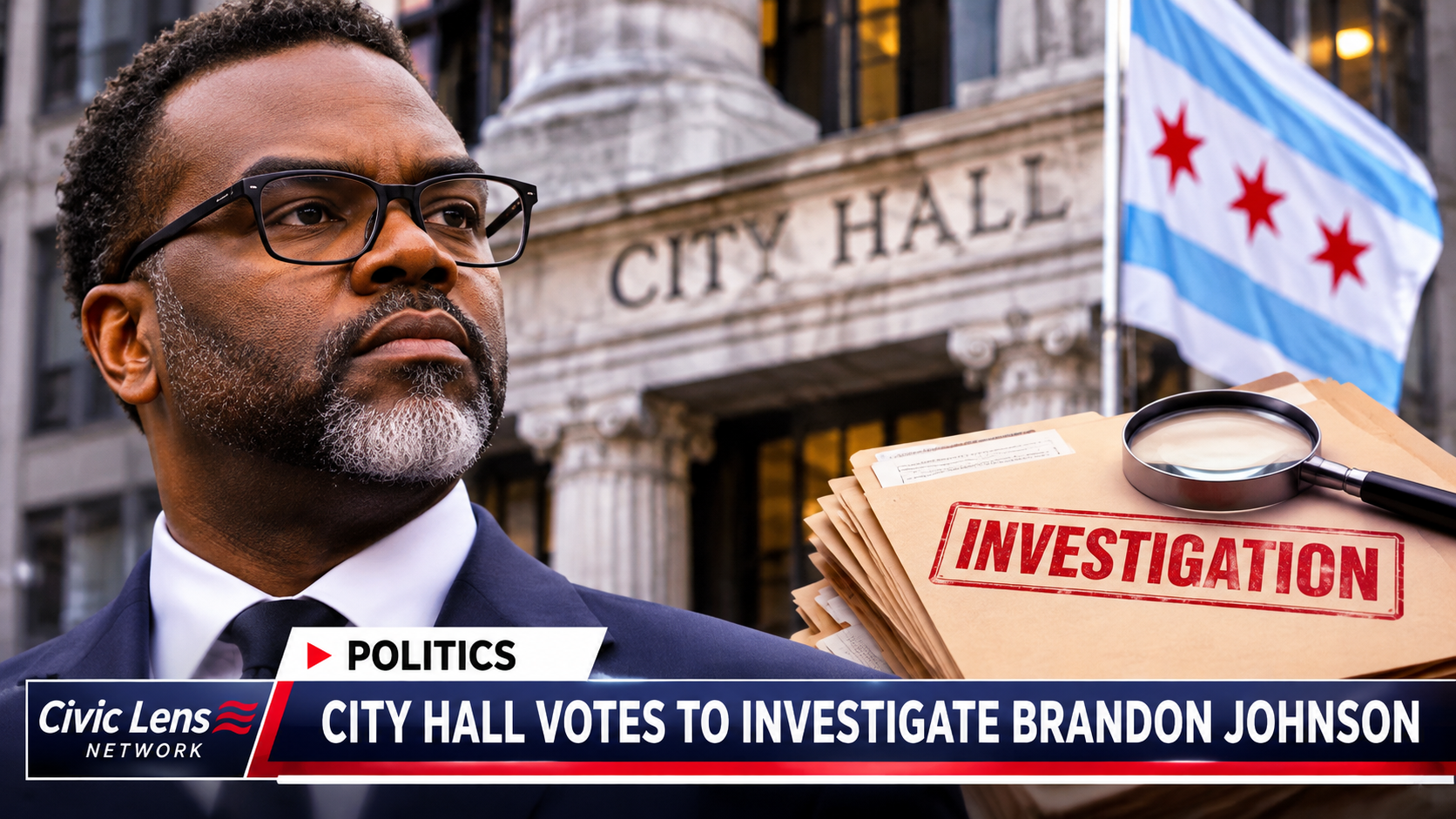
Chicago Mayor Brandon Johnson is facing a major challenge from within City Hall after the Chicago City Council voted overwhelmingly to authorize an independent investigation into whether his administration misrepresented the city’s financial condition to elected officials, investors, and the public.
In a decisive 45–5 vote on Wednesday, November 18, the City Council approved a sweeping three-year review of Chicago’s finances, escalating a controversy that erupted following the abrupt resignation of the mayor’s chief financial officer.
The investigation comes as Chicago struggles with enormous debt obligations, growing budget pressures, and questions about whether the Johnson administration has accurately portrayed the city’s financial problems.
Chief Financial Officer’s Resignation Sparks Investigation
The controversy began when Chicago Chief Financial Officer Ashlee Gabrysch resigned on November 13 after serving just three months in the position.
Gabrysch, a former analyst with Fitch Ratings, publicly challenged the administration’s description of its proposed $17.6 billion budget for 2027.
Johnson’s administration maintained that approximately 76% of its measures to address an $882 million budget shortfall represented structural solutions, meaning financial changes intended to provide lasting benefits rather than temporary relief.
Gabrysch disputed that calculation, arguing that only approximately 56% of the measures qualified as structural solutions.
A central disagreement involved the administration’s plan to borrow approximately $480 million to cover settlements and judgments, including cases involving alleged police misconduct.
Gabrysch argued that borrowing money to pay existing obligations should not be classified as a permanent financial solution.
Her departure raised additional concerns after she indicated that remaining in her position would compromise her professional integrity and obligations.
For City Council members already questioning the administration’s financial strategy, the resignation became a turning point.
City Council Demands Answers
The newly approved ordinance gives Finance Committee Chairwoman Alderman Pat Dowell authority to hire independent financial professionals to examine the city’s financial reporting over the previous three years.
Investigators will determine whether material or intentional misstatements were made in documents, presentations, financial reports, or communications provided to investors, elected officials, and the public.
The review will extend beyond examining financial figures.
Investigators will also have access to internal records and communications, including emails, memoranda, and presentations that could help establish how financial decisions were made and communicated.
City employees and officials are required to cooperate with the investigation, and the ordinance provides enforcement mechanisms for those who refuse.
Dowell, who previously supported Johnson’s mayoral campaign, has become increasingly critical of the administration’s financial proposals.
During Wednesday’s meeting, she emphasized the importance of determining exactly what happened and restoring confidence in the city’s financial reporting.
Other council members expressed concern that Chicago’s financial problems have become increasingly difficult to manage while questions surrounding transparency remain unresolved.
Chicago’s Financial Problems Run Deep
The investigation comes at a particularly difficult moment for Chicago.
The city faces approximately $55 billion in accumulated debt and related financial obligations, while its pension systems carry tens of billions of dollars in unfunded liabilities.
These long-term obligations place substantial pressure on taxpayers and reduce the amount of money available for everyday municipal services.
The administration’s reliance on additional borrowing has intensified disagreements over whether Chicago is addressing its financial problems or simply postponing them.
Borrowing to cover settlements may provide immediate financial flexibility, but it also creates future repayment obligations and interest costs.
Those costs ultimately become part of the city’s long-term financial burden.
Chicago’s financial position has also attracted attention from credit-rating agencies.
Standard & Poor’s placed the city on credit watch amid uncertainty surrounding the budget, raising concerns about the possibility of further financial consequences if the city’s problems remain unresolved.
A credit downgrade could increase borrowing costs, making it more expensive for Chicago to finance infrastructure projects and other obligations.
Johnson Administration Pushes Back
Mayor Johnson has defended his administration’s handling of the budget and characterized the disagreement with Gabrysch as a technical difference in financial interpretation.
His administration maintains that the competing calculations reflect different accounting approaches rather than deliberate deception.
Following Wednesday’s vote, the mayor’s office said it welcomed an independent examination of the city’s finances conducted according to accepted municipal financial standards.
Johnson has also emphasized the need for City Council members to work together to approve a balanced budget.
Not everyone supported the investigation.
Alderman Jason Ervin, a Johnson ally and chairman of the Budget Committee, criticized the review as an unnecessary expense, arguing that Chicago already undergoes annual financial audits.
However, supporters of the investigation contend that routine audits do not necessarily answer questions about internal communications, administrative decisions, or whether officials knowingly presented misleading information.
The investigation is intended to examine those specific concerns.
Investigation Could Have Major Consequences
The City Council’s overwhelming vote represents a significant development in the relationship between Johnson and Chicago’s legislative branch.
With 45 members supporting the measure, the ordinance passed by a margin large enough to override a mayoral veto.
The investigation could also produce findings that influence future budget negotiations, financial disclosures, and the administration’s credibility with investors.
Dowell intends to move quickly to select independent investigators and has indicated that Gabrysch could be asked to testify.
However, whether the investigation will be completed before Chicago’s December 29 budget deadline remains uncertain.
Importantly, the council’s decision does not establish that Johnson or members of his administration committed fraud or knowingly misrepresented financial information. Those are questions the independent review is intended to examine.
What is already clear is that the financial dispute has moved beyond ordinary disagreements over taxes and spending.
Chicago’s elected representatives have now authorized an independent examination of how the mayor’s administration handled and communicated the city’s financial condition.
For taxpayers already facing the consequences of decades of borrowing, pension obligations, and budget shortfalls, the findings could provide important answers about whether City Hall has been presenting an accurate picture of Chicago’s financial future.
The next major development will be the selection of investigators and the beginning of their examination of the administration’s financial records.