November 3, 2026
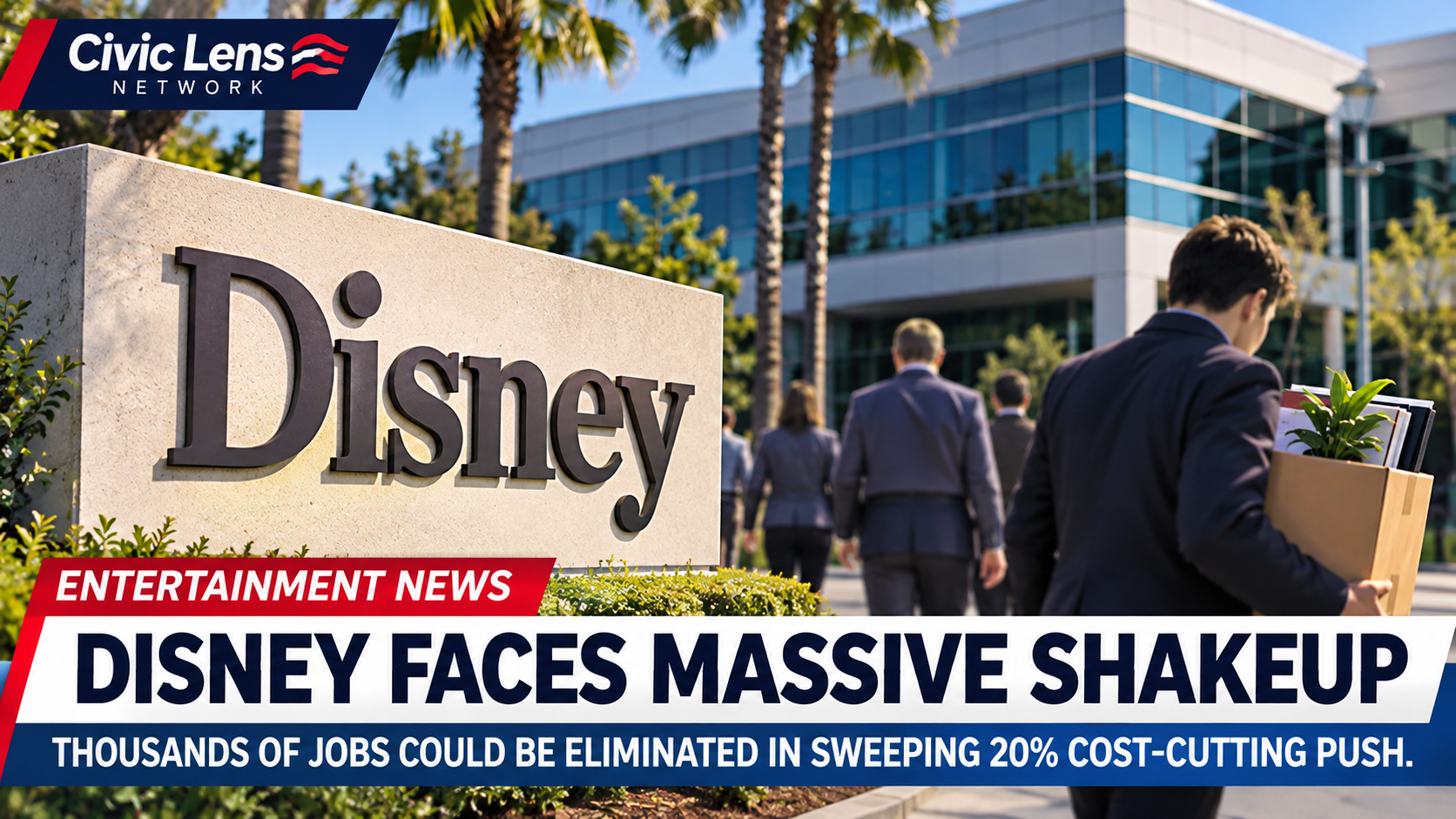
The Walt Disney Company, one of the most powerful entertainment corporations in the world, is reportedly preparing another massive restructuring that could eliminate thousands of jobs across its television networks, movie studios, theme parks, and corporate operations.
The potential layoffs come as Disney management pushes for substantial cost reductions, with some department leaders reportedly instructed to identify ways to reduce annual operating expenses by as much as 20%.
For a company responsible for some of the world’s most recognizable entertainment franchises, the development raises an uncomfortable question: Why is an entertainment empire generating billions in revenue continuing to eliminate jobs?
Thousands of Disney Employees Could Face Layoffs
According to reports emerging November 2 and 3, Disney executives are evaluating significant workforce reductions as part of a broader effort to improve profitability and redirect spending toward businesses considered essential for future growth.
The potential cuts could affect multiple divisions, including Disney’s television networks, film production operations, theme park businesses, and corporate departments.
The precise number of employees who could lose their jobs has not been publicly established.
Disney employed approximately 231,000 people worldwide at the end of fiscal 2025, making it one of the largest employers in the entertainment industry.
Importantly, the reported 20% target refers to potential annual cost savings in certain departments, not a plan to eliminate 20% of Disney’s entire workforce.
Those savings could come from layoffs, reduced operating expenses, restructuring, or a combination of measures.
Disney has not publicly confirmed a final workforce reduction figure or announced a comprehensive timetable for the proposed cuts.
Nevertheless, the reports suggest the company is preparing for another significant transformation.
New CEO Josh D’Amaro Faces Major Challenges
The restructuring effort comes under Disney Chief Executive Officer Josh D’Amaro, who succeeded Bob Iger in March 2026.
D’Amaro previously led Disney’s enormous theme park and experiences business, overseeing operations that include Walt Disney World, Disneyland, international resorts, and the company’s cruise operations.
His appointment represented a new chapter for Disney following years of leadership changes, corporate restructuring, and pressure from investors.
Now D’Amaro faces the challenge of making Disney more profitable while confronting changes in how Americans consume entertainment.
Traditional cable television continues losing customers as audiences move toward streaming platforms.
Movie studios face unpredictable theatrical revenues, while streaming services compete aggressively for subscribers.
Disney is also investing heavily in technology and new entertainment experiences, requiring substantial capital.
The reported restructuring is intended to free up money for those priorities.
But for employees facing potential layoffs, the company’s long-term investment strategy may come at a steep personal cost.
Disney Has Already Eliminated Thousands of Jobs
The latest developments are not an isolated event.
Disney has spent several years reducing its workforce and reorganizing major divisions.
In 2023, under former CEO Bob Iger, the company announced approximately 7,000 job eliminations as part of a plan designed to save billions of dollars.
Those reductions affected operations throughout the entertainment giant.
The workforce cuts continued in subsequent years.
In April 2026, Disney eliminated approximately 1,000 positions across various operations.
Additional reductions followed in July, affecting businesses including Pixar and National Geographic.
In September, several hundred employees working primarily in human resources and technology were laid off.
More recently, Disney’s experiences division eliminated an estimated 100 to 200 positions, including employees associated with Walt Disney Imagineering.
Imagineering is responsible for designing and developing many of Disney’s theme park attractions, resorts, and entertainment experiences.
The repeated reductions demonstrate that Disney’s restructuring is not confined to one struggling department.
Instead, it represents a continuing transformation of the company’s operations.
Hollywood’s Business Model Is Changing
Disney’s difficulties reflect broader challenges throughout the entertainment industry.
For decades, major studios benefited from a relatively predictable system built around theatrical movie releases, television advertising, cable subscriptions, and home entertainment sales.
That model has changed dramatically.
Millions of consumers have abandoned traditional cable packages in favor of streaming services and online video platforms.
At the same time, viewers have more entertainment choices than ever before.
Netflix, YouTube, Amazon Prime Video, and numerous other services compete for audiences that once depended heavily on traditional television networks.
Disney operates its own streaming businesses, including Disney+ and Hulu, but maintaining those platforms requires continued investment in programming, technology, and customer acquisition.
The company must also balance the cost of producing major theatrical releases against increasingly unpredictable box-office performance.
Even established franchises are no longer guaranteed to produce blockbuster profits.
This changing environment has forced entertainment executives to reconsider staffing levels, production budgets, and corporate spending.
Artificial Intelligence Adds Another Layer of Uncertainty
Another major factor facing Hollywood is the rapid development of artificial intelligence.
AI technology is increasingly capable of assisting with visual effects, editing, animation, marketing, localization, and other production-related tasks.
Entertainment companies are evaluating how these tools could reduce expenses and accelerate production.
However, the growing use of AI also creates uncertainty for employees whose work may eventually be automated or substantially changed.
Writers, visual effects artists, editors, animators, and other creative professionals have expressed concerns about the technology’s potential impact on employment.
Disney has not established that the reported upcoming layoffs are directly attributable to AI replacing particular workers.
Nevertheless, artificial intelligence is among the broader technological pressures reshaping the entertainment business.
The central question is whether Hollywood’s pursuit of greater efficiency will ultimately produce better entertainment or simply smaller workforces.
Theme Parks and Cruise Ships Remain Important
Despite the reported cost reductions, Disney continues viewing its theme parks and cruise operations as major opportunities for growth.
The company’s experiences business includes some of the most recognizable vacation destinations in the world.
Disney has invested heavily in new attractions, resort improvements, and additional cruise ships.
These businesses provide revenue streams that are less directly dependent on traditional television viewing habits.
However, international theme park attendance has shown signs of slowing, adding pressure to the company’s growth plans.
Under the reported restructuring strategy, Disney intends to reinvest some savings into new entertainment programming, technology, theme park attractions, and cruise operations.
The objective is to reduce expenses in certain areas while increasing investment in businesses expected to generate stronger future returns.
Whether that strategy can deliver sustained growth remains uncertain.
Can Disney Cut Its Way to Success?
Disney’s reported restructuring highlights a difficult reality facing many American corporations.
A company can generate billions in revenue while simultaneously reducing employment to satisfy financial targets and investor expectations.
From a business perspective, reducing unnecessary expenses can improve efficiency and free up money for investment.
But repeated workforce reductions can also create problems.
Experienced employees may leave, institutional knowledge can disappear, and remaining workers may face increased responsibilities.
Creative businesses face an additional challenge because successful entertainment depends heavily on talented individuals capable of producing original ideas.
Cutting costs may improve short-term financial performance, but excessive reductions could weaken the very creative operations that make Disney valuable.
For consumers, the ultimate test will be whether Disney continues producing movies, television programming, and entertainment experiences worth paying for.
Disney’s Next Earnings Report Could Provide Answers
Investors will be watching closely when Disney releases its next quarterly financial results on November 17.
The company has previously communicated expectations for continued earnings growth, making expense reductions an important part of its financial strategy.
Analysts will be looking for additional information about operating expenses, streaming profitability, theme park performance, and the company’s investment priorities.
Any formal announcement concerning workforce reductions could provide a clearer picture of which divisions will be affected and how many positions may disappear.
Until Disney confirms those details, the full scope of the reported restructuring remains uncertain.
An Entertainment Empire at a Crossroads
For generations, Disney has represented a powerful combination of storytelling, technological innovation, and American entertainment culture.
Its characters, movies, television networks, and theme parks have reached audiences around the world.
But even the largest entertainment companies are not immune to economic pressure, technological disruption, or changing consumer habits.
The prospect of thousands of additional layoffs suggests Disney’s transformation is far from complete.
Executives are attempting to build a more efficient and profitable company while investing in the technologies and entertainment experiences they believe will define its future.
For employees, that transformation could mean another painful period of uncertainty.
For shareholders, it represents a test of whether aggressive cost reductions can produce sustainable growth.
And for audiences, the question is whether a leaner Disney will deliver better entertainment or become another example of a major corporation prioritizing financial efficiency at the expense of the people who helped build its success.
With thousands of potential job losses hanging over the company, Disney’s next moves could reshape one of America’s most influential entertainment institutions for years to come.