November 3, 2026
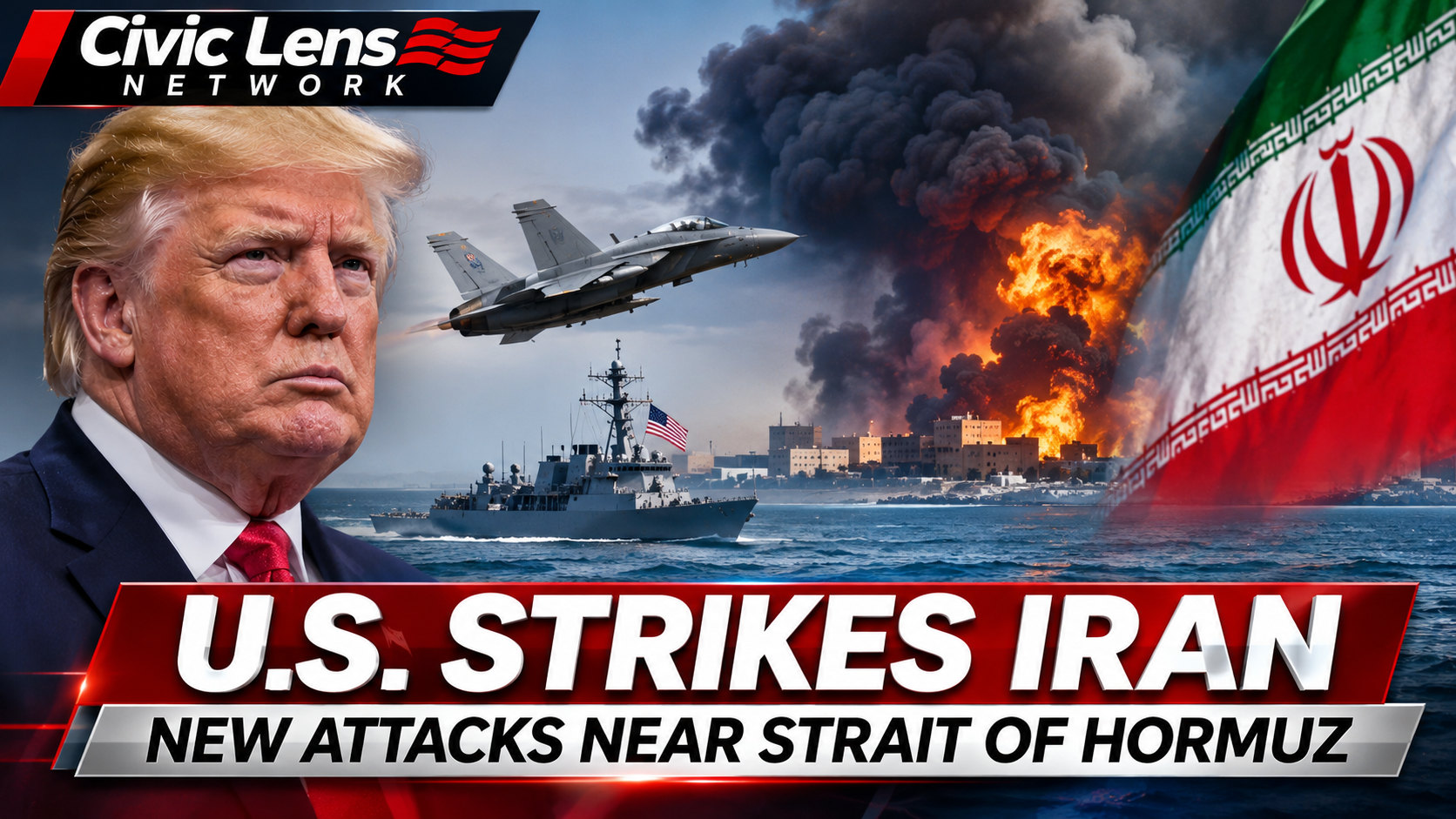
The United States has carried out a new round of military strikes against Iranian positions on Qeshm Island near the strategically vital Strait of Hormuz, following reported threats against American aircraft operating in the region.
American officials confirmed the operation, describing the strikes as limited defensive measures intended to protect U.S. military personnel and equipment from Iranian surface-to-air missile systems.
The military action comes at a critical moment in the ongoing confrontation between Washington and Tehran, as President Donald Trump attempts to secure a diplomatic agreement while maintaining the threat of additional military force.
Although officials emphasized that the latest strikes do not represent the beginning of another major offensive, the operation demonstrates that American forces remain prepared to respond militarily to Iranian threats.
The confrontation also raises renewed concerns about the security of the Strait of Hormuz, one of the world’s most important shipping corridors for oil and natural gas.
American Forces Target Iranian Missile Positions
According to American officials familiar with the operation, U.S. forces struck military targets on Qeshm Island late Monday.
The island sits along the Strait of Hormuz, a narrow waterway connecting the Persian Gulf to the Gulf of Oman and the Arabian Sea.
Its location makes it strategically important for Iran’s military operations and its ability to threaten commercial shipping and foreign naval forces.
One American official described the strikes as a defensive response to Iranian forces employing surface-to-air missiles against U.S. assets.
Other reporting indicated that Iranian forces had fired at an American aircraft before the operation.
The exact nature of that incident has not been fully established publicly.
Officials did not immediately disclose the number of targets struck, the weapons used, or the extent of the resulting damage.
There was also no independently verified casualty count associated with the American operation.
The limited information released suggests that Washington is attempting to neutralize immediate threats without triggering a wider military confrontation.
Iranian Media Reports Explosions
Iranian state-affiliated media reported several explosions on Qeshm Island around the time of the American strikes.
Residents in nearby areas reportedly heard blasts, while additional reports described aircraft activity around the island.
Iran’s Islamic Revolutionary Guard Corps separately claimed that Iranian forces had brought down American drones operating near the Strait of Hormuz.
Those claims have not been independently verified, and the relationship between the reported drone incidents and the American strikes remains unclear.
Iranian officials condemned the military action and maintained that Tehran retains the right to defend itself.
Deputy Foreign Minister Kazem Gharibabadi characterized the confrontation as part of an ongoing state of war between the two countries.
His remarks underscore the difference between Washington’s description of a limited defensive operation and Tehran’s broader interpretation of the conflict.
The Iranian government has repeatedly warned that further American military action could provoke additional retaliation.
Trump Maintains Military Pressure While Pursuing Diplomacy
The strikes come as President Trump continues to balance military pressure with negotiations intended to end the confrontation with Iran.
Trump has argued that American military operations have substantially weakened Iran’s ability to threaten U.S. interests.
At the same time, the president has suggested that an agreement with Tehran remains possible.
Speaking publicly Monday, Trump indicated that negotiations could produce a settlement, even as reports emerged of continuing American military activity.
The administration has repeatedly emphasized that Iran must address American security concerns, including its nuclear activities and threats to regional shipping.
Trump has also raised the possibility of additional strikes against Iranian nuclear-related facilities if diplomatic efforts fail.
Those threats remain separate from the confirmed Qeshm Island operation.
No evidence has been publicly established that the latest strikes targeted Iran’s nuclear program.
Instead, American officials described the operation as a response to immediate military threats.
Why Qeshm Island Matters
Qeshm Island occupies a strategically sensitive position near the Strait of Hormuz.
Iran has long viewed the surrounding waters as central to its national defense and its ability to exert influence over maritime traffic.
The strait connects major Persian Gulf energy producers with international markets.
Before the current conflict, approximately 20 million barrels of oil and petroleum products moved through the waterway each day, according to commonly cited energy shipping estimates.
Any sustained disruption can create serious consequences for global energy prices.
Iranian military forces have developed capabilities intended to threaten ships and aircraft operating in the region, including coastal missile systems, drones, naval vessels, and air-defense equipment.
These capabilities allow Tehran to challenge military operations near its coastline even when facing a technologically superior opponent.
For American commanders, preventing attacks against U.S. aircraft and protecting shipping routes remain major priorities.
The latest strikes demonstrate the continuing importance of maintaining military access to the region.
A Defensive Operation, Not a New Full-Scale Offensive
American officials have been careful to distinguish the Qeshm Island strikes from a broader military campaign.
The operation was described as limited in scope and directed against specific threats.
Officials indicated that it was not intended to signal an immediate return to major combat operations.
That distinction is significant because the United States and Iran have been engaged in a prolonged confrontation involving military strikes, regional instability, and diplomatic negotiations.
Washington has sought to prevent Iranian forces from attacking American personnel, aircraft, and commercial shipping while also exploring a negotiated settlement.
However, even limited operations carry risks.
An Iranian military response could produce additional American strikes, creating a cycle of retaliation that becomes increasingly difficult to contain.
The absence of a publicly detailed military assessment also makes it difficult to determine whether the operation successfully eliminated the reported threats.
Reports of Earlier Undisclosed American Strikes
The latest confrontation has also drawn attention to reports that American forces conducted additional limited operations against Iranian targets in recent weeks.
According to reporting based on U.S. officials, some of those operations were deliberately kept out of the public spotlight.
The reported objective was to counter Iranian threats without creating the impression that Washington had resumed a large-scale offensive.
The disclosure raises important questions about the extent of ongoing military activity and how the administration is communicating its operations to the American public.
Limited defensive strikes can be a legitimate part of protecting deployed forces, but their frequency and objectives remain matters of public interest.
Congress also has an oversight role in determining the scope of American military involvement overseas.
The administration has not publicly provided a comprehensive account of every reported operation.
Iran’s Threats to American Forces
The confrontation follows months of attacks and counterattacks involving American and Iranian military capabilities.
Iran has employed drones, missiles, and other weapons against targets throughout the Middle East.
American military facilities and equipment have sustained damage during the broader conflict.
An Associated Press examination of satellite imagery and regional reporting documented extensive damage to U.S. military infrastructure from Iranian and Iran-backed attacks earlier this year.
Those findings demonstrate that Iranian forces retain the ability to inflict damage despite American technological and military advantages.
At the same time, the United States maintains overwhelming conventional military capabilities, including advanced aircraft, precision-guided weapons, naval forces, and surveillance systems.
The latest strikes illustrate how those capabilities can be used against specific threats without necessarily launching a sustained offensive.
Nevertheless, the possibility of further Iranian retaliation remains a serious concern.
The Risk to Global Oil Supplies
Military activity around the Strait of Hormuz carries consequences far beyond the immediate confrontation.
The waterway is essential to international energy transportation.
Oil producers in the Persian Gulf depend heavily on maritime access through the strait to reach customers in Asia, Europe, and other markets.
Even when shipping continues, threats against commercial vessels can increase insurance costs, disrupt schedules, and create uncertainty for energy traders.
Reports of the American strikes contributed to renewed attention to oil prices and regional shipping risks.
A prolonged disruption could affect American consumers through higher gasoline and transportation costs.
The potential economic consequences give Washington and Tehran strong incentives to prevent the confrontation from expanding.
However, those incentives do not eliminate the possibility of miscalculation.
An attack on a commercial vessel, the destruction of an American aircraft, or significant military casualties could rapidly change the situation.
Diplomatic Talks Continue Behind the Scenes
Despite the military confrontation, diplomatic efforts have not ended.
Regional intermediaries, including Qatar, have been involved in discussions aimed at reducing tensions between Washington and Tehran.
Vice President JD Vance has expressed cautious optimism about the possibility of reaching an agreement.
The administration has indicated that progress remains possible, although major disagreements persist.
Iranian officials have also discussed conditions under which maritime traffic through the Strait of Hormuz could return to normal.
Those discussions involve complicated security, economic, and diplomatic issues.
There is no confirmed final agreement.
The American strikes therefore occurred against the backdrop of negotiations that could either produce a settlement or collapse into renewed confrontation.
For Trump, the challenge is maintaining sufficient military pressure to deter Iranian attacks without undermining the possibility of a diplomatic breakthrough.
What Has Been Confirmed and What Remains Unknown
Several facts about the latest military operation are established.
American officials confirmed that U.S. forces conducted limited strikes against Iranian positions on Qeshm Island.
The operation was described as defensive and connected to threats involving Iranian surface-to-air missiles.
Iranian media reported explosions in the area.
American officials indicated that the strikes were not intended to launch a new major offensive.
However, important details remain unresolved.
The Pentagon has not publicly released a complete target list or damage assessment.
The number of Iranian casualties, if any, has not been independently confirmed.
Claims concerning American drones and the precise sequence of aircraft-related incidents require further verification.
It is also unclear whether the operation will lead to additional American or Iranian military action.
Those uncertainties are especially important when assessing reports of possible escalation.
America’s Next Move
The Trump administration now faces a consequential decision.
It can continue relying on limited military responses to protect American forces while pursuing a negotiated settlement, or it could expand military operations if Iranian attacks continue.
The latest strikes suggest that Washington is attempting to preserve both options.
For Iran, the situation presents its own difficult calculation.
Continued attacks against American aircraft and shipping could invite further military retaliation, while diplomatic concessions could create political challenges for Tehran’s leadership.
Neither side has publicly announced that the confrontation is over.
The possibility of a broader conflict therefore remains.
A Dangerous Moment in the Strait of Hormuz
The American strikes on Qeshm Island are a reminder that the military confrontation with Iran remains active despite ongoing diplomatic efforts.
The United States has demonstrated that it is willing to use force when officials believe American personnel and equipment face immediate threats.
Iran, meanwhile, continues to signal that it will resist American military pressure.
For now, Washington describes the latest operation as limited and defensive.
But the strategic importance of the Strait of Hormuz means even a relatively small confrontation can have consequences for regional security, international commerce, and global energy markets.
The immediate questions are whether Iran will retaliate, whether American forces will conduct additional operations, and whether negotiations can produce an agreement before the conflict escalates further.
Those answers will determine whether the latest strikes remain an isolated military incident or become another turning point in the confrontation between the United States and Iran.