November 3, 2026
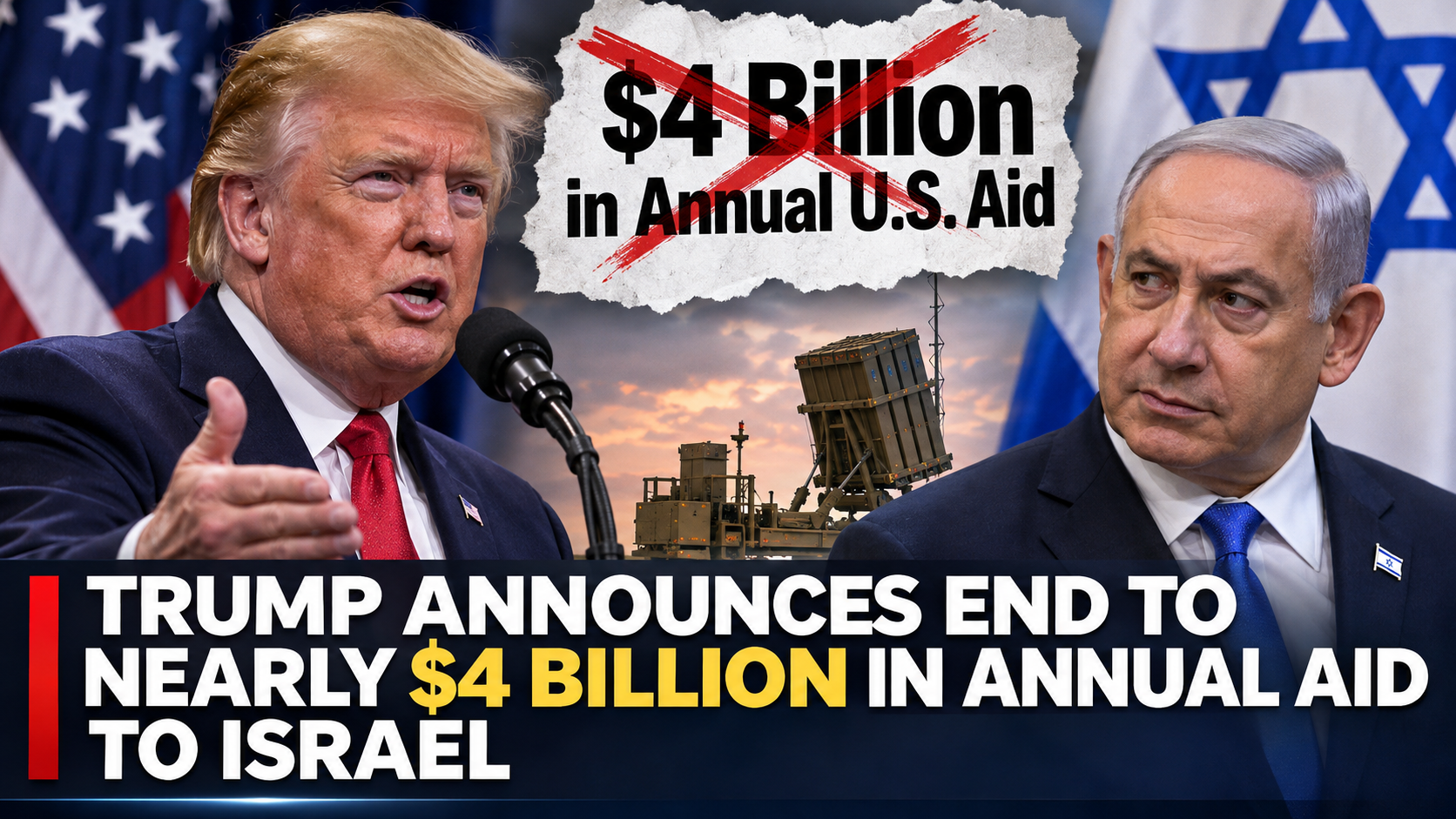
President Donald Trump announced Tuesday that the United States intends to end nearly $4 billion in annual military assistance to Israel by the end of 2026, potentially marking one of the most significant changes in American foreign policy toward its closest Middle Eastern ally in decades.
Speaking during an Election Day interview on Fox News, Trump said he and Israeli Prime Minister Benjamin Netanyahu had already reached an understanding to discontinue the annual payments.
The president argued that Israel has become economically successful enough to finance its own defense needs without relying on American taxpayers.
The announcement immediately raised questions about the future of the longstanding U.S.-Israel military assistance agreement, the role of Congress in determining foreign aid spending, and whether the decision represents a permanent change in Washington’s relationship with Jerusalem.
Trump emphasized that the United States would remain committed to Israel’s security and would continue selling American military equipment to the country.
However, his remarks suggested that the era of providing billions of dollars in annual military assistance could be approaching its end.
Trump Says Israel No Longer Needs American Financial Assistance
During the interview, Trump said he and Netanyahu had discussed the possibility of ending American assistance for several years.
According to the president, Netanyahu supported the change and recognized that Israel had developed the economic and military capabilities necessary to finance its own defense.
Trump characterized the annual payments as increasingly unnecessary, arguing that Israel is now a prosperous nation with a sophisticated economy and one of the most advanced militaries in the Middle East.
The president also suggested that continuing the payments had become politically difficult to justify in the United States.
For decades, American taxpayers have provided billions of dollars annually to support Israel’s military capabilities, including advanced weapons systems, aircraft, missile defense technology, and other defense equipment.
Trump’s announcement challenges the assumption that this arrangement must continue indefinitely.
Nevertheless, the administration has not yet released a detailed implementation plan explaining how the proposed cutoff would affect existing commitments.
The $3.8 Billion Agreement That Runs Through 2028
The United States currently provides Israel approximately $3.8 billion annually under a 10-year military assistance memorandum of understanding negotiated in 2016.
The agreement covers fiscal years 2019 through 2028 and established a framework for approximately $38 billion in American security assistance over that period.
The annual amount generally consists of $3.3 billion in Foreign Military Financing and $500 million for missile defense cooperation.
These funds have supported the purchase of American-made military equipment and joint defense programs.
Although Trump described the annual assistance as approximately $4 billion, the existing agreement specifies $3.8 billion in regular yearly support.
That distinction matters because the president’s announcement did not clearly establish whether he intends to eliminate every category of assistance or only particular funding arrangements.
The agreement also extends beyond the president’s proposed December 2026 cutoff.
As a result, implementing the announcement could require negotiations, changes to future appropriations, or other government actions.
Congress plays a central role in authorizing and appropriating federal spending.
The White House cannot simply assume that a public announcement automatically cancels every existing commitment.
Netanyahu Has Previously Supported Reducing Dependence on U.S. Aid
Although Trump’s announcement surprised observers because of its accelerated timeline, Netanyahu has previously expressed support for gradually reducing Israel’s dependence on American military assistance.
The Israeli prime minister has argued that Israel should eventually transition from receiving military aid to maintaining a defense partnership built more heavily around trade, technology, and direct military purchases.
That approach would allow Israel to continue acquiring American weapons while financing more of those purchases itself.
In earlier public remarks, Netanyahu discussed reducing American assistance over a period of years.
Trump’s proposed deadline is considerably more aggressive.
Instead of a gradual reduction extending into the next decade, the president now says annual assistance should stop after December 2026.
As of Tuesday morning, Netanyahu’s office had not publicly confirmed the specific agreement described by Trump.
That leaves important questions about the timing and terms of the proposed arrangement unresolved.
America First Meets a Longstanding Military Alliance
Trump’s announcement reflects a broader debate over how much American taxpayers should spend supporting foreign governments.
The president has repeatedly argued that wealthy allies should assume greater responsibility for their own defense rather than relying indefinitely on Washington.
He has applied similar pressure to NATO members, urging European governments to increase military spending and reduce their dependence on American security assistance.
The Israel announcement brings that principle to one of Washington’s most established military partnerships.
Israel possesses a sophisticated defense industry, advanced technological capabilities, and significant military resources.
Its armed forces operate American-made fighter aircraft, advanced missile defense systems, precision weapons, and domestically developed military technologies.
Supporters of reducing assistance argue that Israel’s economic development makes continued annual grants less necessary than they were during earlier decades.
Critics of the proposal warn that eliminating established funding could complicate military planning, weaken joint defense programs, and create uncertainty during a period of continuing regional instability.
The dispute is not necessarily about whether the United States should remain an ally of Israel.
It is about whether maintaining that alliance requires American taxpayers to continue providing billions of dollars in annual financial support.
Trump Says Israel Can Continue Buying American Weapons
The president made clear that ending annual financial assistance would not mean ending military cooperation.
Under the approach Trump described, Israel would remain free to purchase American military equipment.
That distinction could have major implications for the defense industry.
Much of the existing American military assistance is already connected to purchases from U.S. manufacturers.
Companies producing aircraft, missile defense equipment, electronics, and other military systems benefit from contracts supported by the assistance program.
If Israel begins financing those purchases directly, American defense manufacturers could continue selling equipment without the same level of taxpayer-funded grants.
However, whether Israel would maintain its current purchasing levels remains uncertain.
Military procurement decisions depend on national budgets, strategic priorities, regional threats, and the cost of major weapons systems.
A reduction in American assistance could therefore affect both Israeli defense planning and American manufacturers.
The precise consequences will depend on the structure of any final agreement.
The Political Debate Over Foreign Aid Is Changing
Trump’s announcement also comes as American public attitudes toward foreign military assistance have undergone significant changes.
The war in Gaza and broader Middle Eastern instability have intensified debate over the financial and military support Washington provides Israel.
Criticism of unconditional assistance has grown among Democratic voters and some Republican constituencies.
At the same time, many lawmakers in both parties continue to support maintaining strong military cooperation with Israel.
During Tuesday’s interview, Trump argued that the annual assistance had become a political issue that opponents could use against Republicans.
He specifically referenced criticism from Michigan Democratic Senate candidate Abdul El-Sayed, who has opposed unconditional military assistance to Israel.
The president suggested that continuing to provide billions of dollars to a prosperous foreign country created a difficult argument for American politicians to defend.
His comments came as voters across the United States headed to the polls for the 2026 midterm elections.
The timing places the announcement directly into a national debate over federal spending, foreign commitments, and America’s role in international security.
However, the policy’s long-term significance will depend on whether the administration actually implements the proposed change.
What Happens to the Money?
One of the biggest unanswered questions concerns what would happen to the nearly $4 billion in annual funding if the assistance ends.
The president did not announce a specific plan to redirect the money toward domestic programs, reduce federal borrowing, or finance other defense priorities.
A decision to discontinue foreign assistance does not automatically mean that the same amount becomes available for new domestic spending.
Congress would need to determine how future appropriations are structured.
Lawmakers could choose to reduce overall spending, redirect funds toward other national security priorities, or support unrelated federal programs.
Any potential budget savings would also depend on whether other forms of assistance or military cooperation continue.
For American taxpayers, the announcement raises a fundamental question about how Washington prioritizes spending abroad while facing substantial financial obligations at home.
But until the administration releases a detailed proposal, the ultimate effect on federal expenditures remains uncertain.
Could Congress Block the Change?
The proposed cutoff could create a significant debate on Capitol Hill.
The existing military assistance arrangement was negotiated between the two governments, but Congress controls federal appropriations.
Lawmakers could seek to preserve funding, modify the terms of assistance, or support the president’s proposed reduction.
Members of Congress who favor maintaining current assistance may argue that the funding strengthens regional security and supports American defense manufacturers.
Others may welcome an opportunity to reduce foreign spending or reconsider whether wealthy allies should continue receiving substantial financial assistance.
The administration must also clarify whether it intends to change the existing memorandum of understanding through bilateral negotiations or pursue adjustments through the congressional budget process.
Those details will determine how quickly the proposed policy can take effect.
The announcement itself does not establish that all funding has already been canceled.
A Major Change With Regional Consequences
The implications extend beyond Washington and Jerusalem.
Israel remains a central American security partner in a region affected by longstanding conflicts, Iranian military activity, armed groups, and competing regional alliances.
American military assistance has historically been intended to help Israel maintain its qualitative military edge over potential adversaries.
A transition toward self-financed military purchases could change how Israel plans its defense budget and acquires advanced weapons.
It could also affect future negotiations over missile defense cooperation and other joint programs.
Trump’s statements suggest he believes the alliance can remain strong without continuing the traditional funding arrangement.
Whether that approach produces a more financially independent Israel or creates new security complications remains to be seen.
The Questions That Must Be Answered
Several critical details remain unresolved following the president’s announcement.
The White House has not publicly released a complete explanation of which funding programs would end.
Netanyahu’s office has not independently confirmed the specific agreement described by Trump.
Congress has not approved a comprehensive replacement for the existing assistance arrangement.
And the administration has not explained whether the proposed cutoff would affect previously approved assistance, future appropriations, or both.
Those distinctions are essential.
A presidential announcement can signal a major policy shift, but the actual financial and diplomatic consequences depend on the decisions that follow.
Until those decisions are documented, the reported agreement should be understood as Trump’s announced plan rather than a completed termination of military assistance.
A Potential Turning Point in U.S.-Israel Relations
For decades, American financial support has been a defining feature of the U.S.-Israel security relationship.
Trump’s announcement suggests that arrangement could soon undergo its most substantial transformation in years.
The president is arguing that Israel has reached a point where it can assume greater responsibility for financing its own defense while remaining a close American ally.
If implemented, the proposal could alter federal spending priorities, reshape defense procurement arrangements, and establish a new model for cooperation between the two countries.
But significant legal, financial, and diplomatic questions remain unanswered.
The existing agreement runs through 2028, and neither government has yet published the detailed terms of the accelerated cutoff described by Trump.
For now, the president has made his position clear: America should no longer provide billions of dollars in annual military assistance to a country he believes can afford to pay for its own defense.
Whether that declaration becomes binding policy will be determined by what Washington and Jerusalem do next.