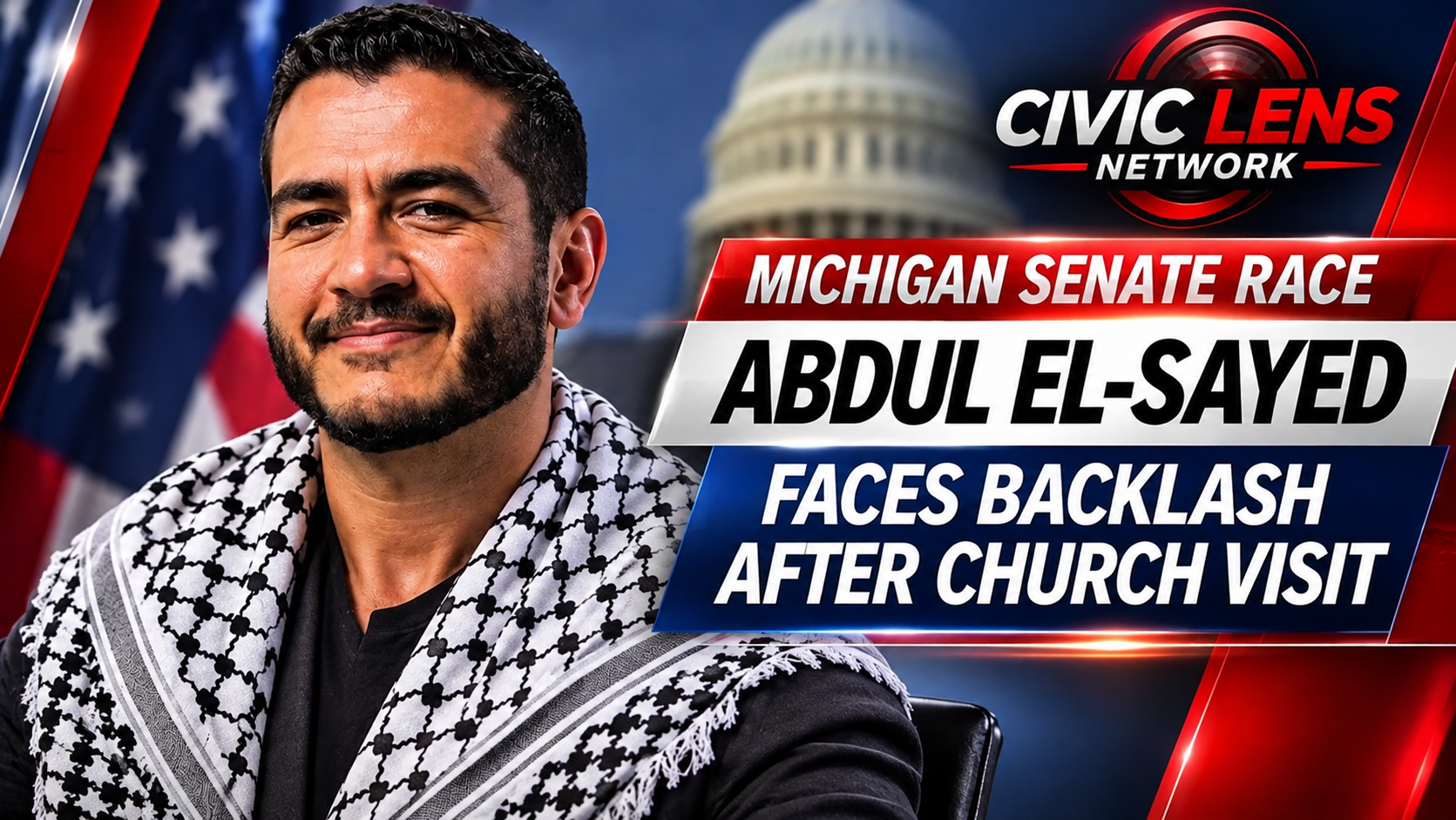
Michigan Democratic Senate candidate Abdul El-Sayed is facing growing scrutiny over his outreach to Black Christian voters after footage of his church appearances circulated online, triggering criticism of his demeanor and raising questions about his relationship with one of the Democratic Party’s most important voting constituencies.
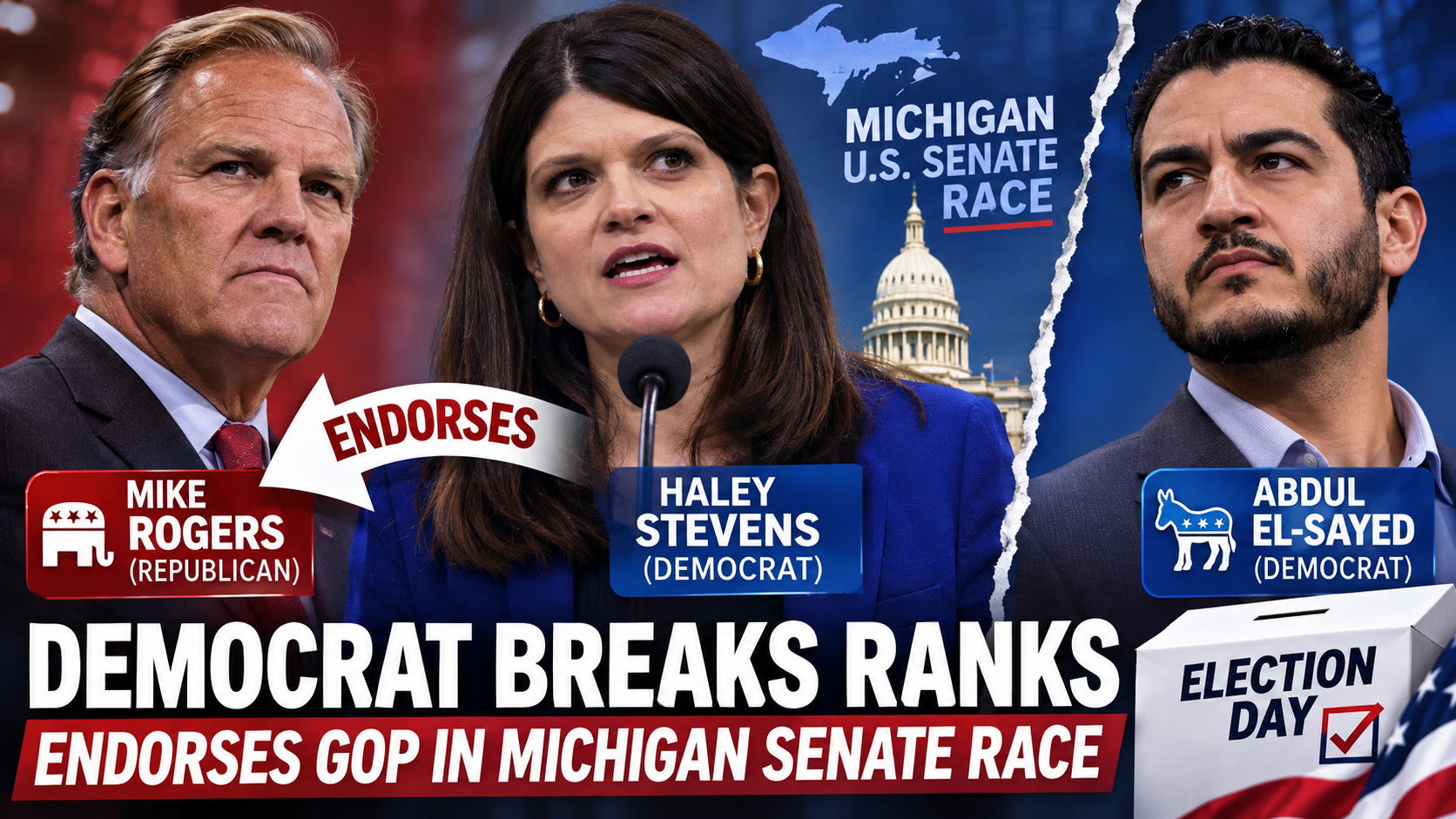
The controversy comes at a particularly difficult moment for El-Sayed, whose campaign has been shaken by disagreements with prominent Democrats, criticism from Black community leaders, and the extraordinary decision by former Democratic primary rival Rep. Haley Stevens to endorse Republican Mike Rogers.
With the November 3 midterm election underway, the dispute has exposed divisions that Democratic leaders had hoped to resolve before voters headed to the polls.
Church Appearance Sparks Online Criticism
On October 18, El-Sayed attended a predominantly Black church in Flint, Michigan, alongside Democratic Rep. Ayanna Pressley of Massachusetts.
Footage of the appearance showed the Senate candidate standing in the front row during the service.
The video quickly circulated across social media, where critics mocked his facial expressions and questioned whether he appeared comfortable participating in the congregation’s worship.
Some commentators characterized the appearance as an awkward attempt to connect with Black Christian voters. Others argued that judging a candidate’s intentions from a brief video clip was unfair.
The footage itself does not establish what El-Sayed was thinking or whether congregation members felt offended by his presence.
Nevertheless, the reaction highlighted a broader political challenge for his campaign: convincing skeptical voters that his outreach to their communities is genuine.
Black Pastor Describes Growing Frustration
The criticism extends beyond social media.
Rev. Charles E. Williams II, president of the Michigan chapter of the National Action Network, acknowledged significant concerns about El-Sayed among some Black voters during an October gathering at Detroit’s Historic King Solomon Missionary Baptist Church.
Williams described a range of reactions, including hesitation, skepticism, and outright disdain toward the Democratic Senate nominee.
His comments were captured in footage subsequently reported by news outlets.
Williams also expressed concern that dissatisfaction with El-Sayed could discourage voters from participating in the election altogether, potentially affecting other Democratic candidates.
The pastor emphasized the importance of voter participation even when people have serious reservations about individual candidates.
His remarks illustrated a political reality facing the Democratic Party: winning a nomination does not automatically guarantee enthusiastic support from every constituency within the party’s coalition.
A Religious Outreach Effort Under Scrutiny
El-Sayed, who is Muslim, has continued visiting Christian congregations as part of his campaign’s outreach efforts.
Religious differences do not prevent candidates from engaging with voters of other faiths, and visits to Black churches have long been a feature of American political campaigns.
However, some critics have questioned whether El-Sayed’s appearances reflect sustained relationships with congregations or a late attempt to repair weaknesses in his support.
The distinction matters because Black churches have historically served as important centers of civic organization, community leadership, and political participation.
Their congregations are not politically uniform, and their members may have different priorities involving education, employment, public safety, religious liberty, healthcare, and economic opportunity.
For El-Sayed, the challenge is not simply appearing at a church service. It is demonstrating that he understands and will address the concerns of the people attending.
Democratic Infighting Reaches a Breaking Point
The controversy surrounding El-Sayed’s church outreach has unfolded alongside a much larger political confrontation.
Rep. Haley Stevens, whom El-Sayed defeated in Michigan’s Democratic Senate primary, had previously endorsed his general election campaign despite lingering disagreements.
But their relationship deteriorated in the final days before Election Day.
Stevens publicly complained that El-Sayed had excluded her from campaign activities and had failed to adequately address concerns among voters who supported her during the primary.
The dispute culminated on November 1 when Stevens appeared alongside Republican Senate nominee Mike Rogers at Detroit’s Perfecting Church.
Stevens then announced that she was endorsing Rogers rather than El-Sayed.
Her decision represented an extraordinary break with her party’s Senate nominee just two days before the election.
The appearance was particularly significant because Stevens and El-Sayed had previously been expected to participate in a church-related unity effort intended to bring Democratic supporters together.
Instead, the political rivals moved further apart.
A Republican Opportunity in Detroit
Rogers’ appearance with Stevens provided Republicans with an unusual opportunity to appeal to voters who might otherwise support the Democratic nominee.
The joint church visit gave the Republican campaign a prominent platform in Detroit, where Black voters have historically played a major role in Democratic electoral success.
For Rogers, the endorsement also offered a chance to argue that dissatisfaction with El-Sayed extended beyond Republican criticism.
For Democrats, however, the episode created another challenge in a Senate race already marked by disputes over foreign policy, political messaging, and relationships with important community organizations.
El-Sayed’s supporters have continued defending his candidacy and encouraging voters to focus on the issues rather than internal party disagreements.
The Larger Question Facing Michigan Democrats
The controversy has also raised questions about how political campaigns approach religious and minority communities.
A candidate’s attendance at a worship service can provide an opportunity to listen, learn, and build relationships. But when those appearances occur during a contentious election, they can also become the subject of intense political scrutiny.
In El-Sayed’s case, critics have used church footage to question his authenticity, while community leaders have raised more substantive concerns about trust and engagement.
Those are separate issues.
A brief video cannot establish whether a politician respects a congregation. Statements from community leaders, however, provide a clearer indication of the concerns that campaigns may need to address.
The disagreement also demonstrates that Black voters cannot be treated as a single political bloc whose support is automatically secured by a party nomination.
Different communities, churches, and individual voters have their own priorities and expectations.
Election Day Arrives Amid Unresolved Divisions
As Michigan voters cast their ballots on November 3, El-Sayed’s campaign is confronting the consequences of a deeply divided Democratic coalition.
His controversial church appearances have attracted attention, but the more consequential developments involve the public criticism from community leaders and the dramatic defection of a former Democratic primary opponent.
The central issue is no longer simply whether a candidate looked uncomfortable during a church service.
It is whether El-Sayed has built enough trust among voters who remain skeptical of his candidacy, and whether Michigan Democrats can overcome their internal disagreements.
The final outcome will be determined by voters, not viral videos or political commentators.
What is already clear is that the closing days of Michigan’s Senate campaign have exposed serious divisions over representation, political loyalty, and the relationship between candidates and the communities whose support they seek.