Washington has become a place where political confrontations generate headlines, fundraising opportunities and campaign material, while the business of governing frequently takes a back seat.
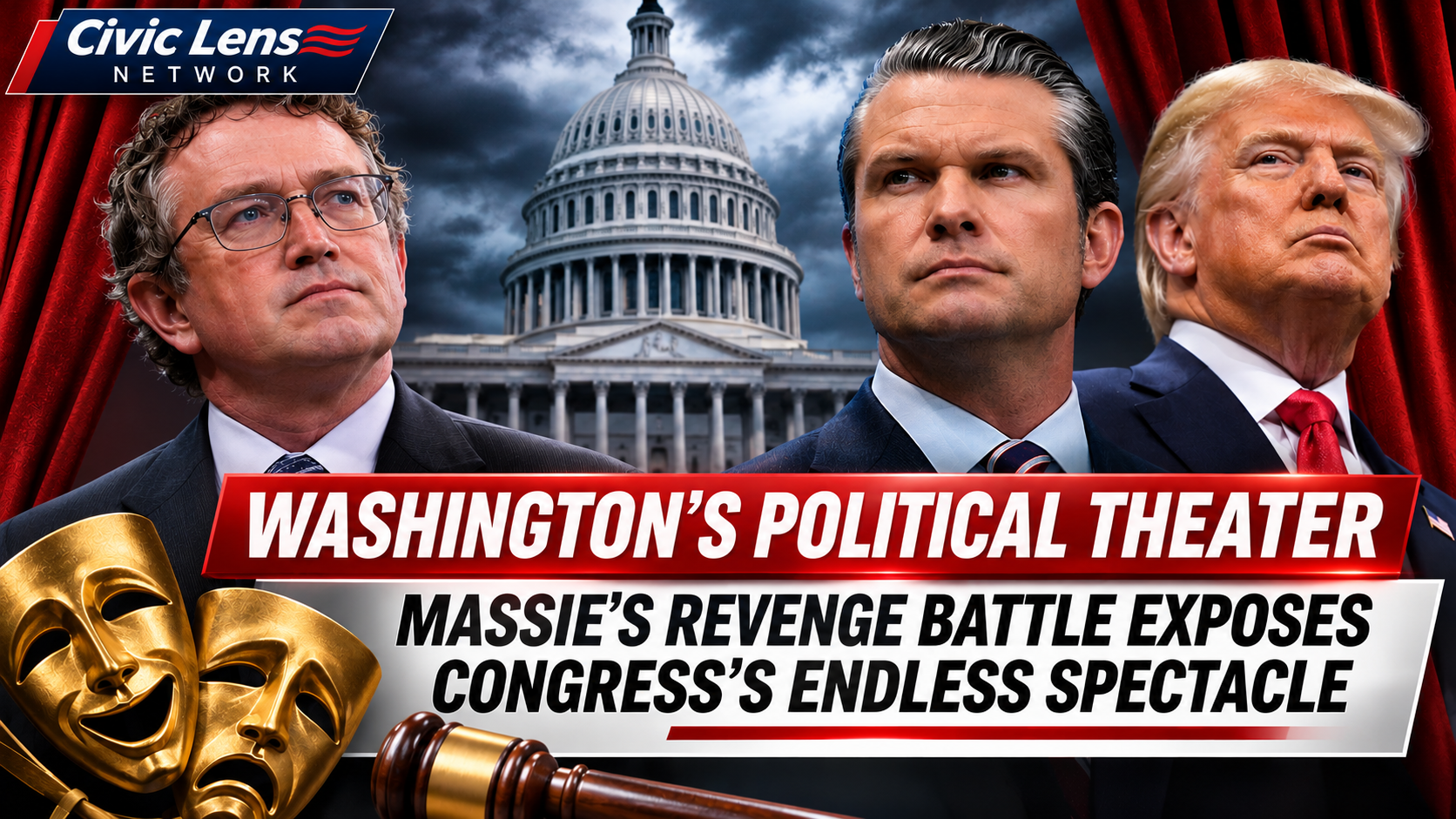
The latest confrontation involving outgoing Republican Congressman Thomas Massie and Defense Secretary Pete Hegseth offers a striking example of how personal political rivalries can become national congressional battles.
Massie attempted to impeach Hegseth through eight articles accusing the defense secretary of constitutional violations and misconduct involving American military operations.
But the impeachment effort unfolded against a political backdrop that deserves just as much attention as the accusations themselves.
Trump Helped End Massie’s Congressional Career
Earlier this year, President Donald Trump backed former Navy SEAL Ed Gallrein in the Republican primary against Massie.
Gallrein defeated Massie, ending the Kentucky congressman’s reelection bid.
Hegseth also supported Gallrein and publicly criticized Massie during the campaign.
That history makes the subsequent impeachment confrontation particularly significant.
Massie was not simply challenging an administration official with whom he disagreed. He was targeting a defense secretary who had supported the successful effort to remove him from Congress.
The political implications became even clearer when Massie discussed why he was pursuing Hegseth rather than Trump directly.
Speaking to reporters, Massie used a metaphor about taking one of the president’s horses out from under him so Trump might see things differently.
That statement placed the impeachment effort squarely within Massie’s larger confrontation with the president.
Massie maintained that his impeachment resolution concerned constitutional violations. The timing, the primary defeat and his own comments nevertheless made the political rivalry impossible to ignore.
Democrats Joined the Fight, but the Effort Collapsed
On November 10, the House voted 211 to 204 to send Massie’s impeachment resolution to committee, effectively stopping it from advancing.
Massie was the only Republican to oppose the procedural move. Democrats who participated also opposed sending the resolution to committee.
Yet 11 Democrats were absent.
House Democratic leader Hakeem Jeffries had publicly supported impeaching Hegseth, but the party did not deliver enough votes to defeat the procedural motion.
The result was another high-profile impeachment confrontation that produced enormous attention without removing anyone from office.
Hegseth remained in his position. Republican leaders defended the administration. Democrats reiterated their objections. Massie received another national platform for his opposition to Trump.
The impeachment effort ended without the House voting directly on the eight articles.
Impeachment Has Become a Recurring Political Weapon
The Hegseth confrontation follows years of impeachment battles involving officials from both political parties.
In 2024, House Republicans impeached Homeland Security Secretary Alejandro Mayorkas over his handling of the southern border.
The Democratic-controlled Senate dismissed the articles without conducting a full trial, and Mayorkas remained in office.
That episode demonstrated the limits of impeachment when the House and Senate disagree about whether allegations warrant removal.
It also demonstrated how an impeachment vote can become a major political event even when it does not result in a conviction.
Congress possesses the constitutional authority to investigate executive officials and pursue impeachment. That responsibility is essential when credible allegations of serious misconduct arise.
The problem comes when congressional confrontations become inseparable from partisan messaging, personal rivalries and the permanent campaign for political attention.
The House and Senate Are Always Campaigning
Members of the House face reelection every two years, creating constant pressure to demonstrate their political relevance.
Senators serve longer terms, but they operate within the same environment of party competition, national publicity and fundraising.
A dramatic hearing can dominate television coverage. A confrontation with a Cabinet secretary can generate headlines across the country. An impeachment resolution can force colleagues to take positions on controversial issues.
These activities may serve legitimate purposes, but they can also consume enormous attention without producing legislative results.
Americans continue confronting questions about federal spending, the national debt, military operations and the proper limits of executive power.
Those issues require more than speeches and procedural confrontations.
They require lawmakers willing to negotiate, legislate, investigate effectively and explain what their efforts actually accomplished.
Political Rivalries Should Not Replace Government Accountability
Massie’s defeat by a Trump-backed challenger is an important part of understanding his final months in Congress.
So is his longstanding disagreement with Trump over presidential war powers, federal spending and other issues.
The impeachment resolution brought those disputes into direct conflict with Hegseth, another administration figure who had opposed Massie’s reelection.
The House’s decision to send the resolution to committee ended the immediate confrontation, but it did little to settle the underlying constitutional questions.
That is the larger frustration surrounding congressional politics.
The public witnesses the accusations, the speeches, the party divisions and the procedural votes. What often remains unresolved is the original dispute that supposedly justified the confrontation.
Congress was created to represent the people, write laws, control federal spending and hold government officials accountable.
Those responsibilities cannot be measured by the number of headlines lawmakers generate.
They must ultimately be measured by the decisions they make, the laws they pass, the oversight they conduct and the results they deliver.
The Massie-Hegseth confrontation may have ended with a procedural vote, but the broader debate about political theater in Washington remains very much alive.
Americans deserve a Congress whose work extends beyond the next televised confrontation and whose commitment to accountability lasts longer than the news cycle.